John Bates Clark Quotes
If the adjustment made by a court can be accepted or not, it will be refused whenever the men can gain more by continuing the strike, with whatever of violence that involves.
Clark, John Bates. "Is Authoritative Arbitration Inevitable?" Political Science Quarterly, vol. 17, no. 4, Academy of Political Science, 1902, p. 558.

Mitchell had warned that the strike was coming (see {607760}). The strike lasted 29 days and ended when the miners received a 10% wage increase. President Theodore Roosevelt mediated the dispute.


This was praise indeed as Wellman was generally very conservative.


Ford was a virulent hater of labor unions. He even hired goons to beat up union members.


“Operators” referred to an Executives of the Coal Mining Companies most of whom were grossly impolite and unconstructive in the mediation sessions. The President was a very fit man who boxed and wrestled several times a week for exercise and could get very physical as well as social and intellectual.


This is a fascinating historical quotation about labor disputes and strikes. The conservatives at the beginning of the 20th century were horrified at the idea of a strike of any kind. Their idea of a labor dispute with picketing would allow one or two protesters with signs stating their case to stand outside the factory. Or one person visiting a worker and suggesting that the worker not work during the strike. However, when the degree of passion was expressed by many people picketing they were opposed. At the time, the working class and the unions had no other resources other than the bodies of their workers. They could not advertise, publish newspapers, hire lobbyists to explain their point of view to Parliament. The conservatives then were then very undemocratic and believed that the monarchy with a responsible aristocracy of the upper class should run the nation for all. They WERE actually intimidated by a large number of people doing anything that was not endorsed by or approved by the ruling class. Women in large protest marches for the right to vote were intimidating also. The threat was, as they saw it, “Do as we demand or we will bring down the world as you know it.” In a sense that is what happened. There is no conservative in England who would today deny a union the right to picket with many people.

Morgan supported the strikers because they were abused, paid unfair wages, and were made to work in unsafe conditions. However, she believed that reform was needed and not class warfare which pitted workers and laborers against the bosses and owners. However, at the time the bosses and owners did not believe that there should be any reform and the nation was in decades of class warfare that has diminished but not ended into the 21st century. The clothing workers finally were offered higher pay and somewhat better working conditions but the owners would not recognize their union and their right to collectively bargain. At this point Morgan ceased supporting the workers actively.
These work hours, 6 days a week were typical for Russian workers of the time. The Russian workers were ripe for any revolution or reform that promised a better life.


The strike went on. See Mitchell’s later statement: {607757}.


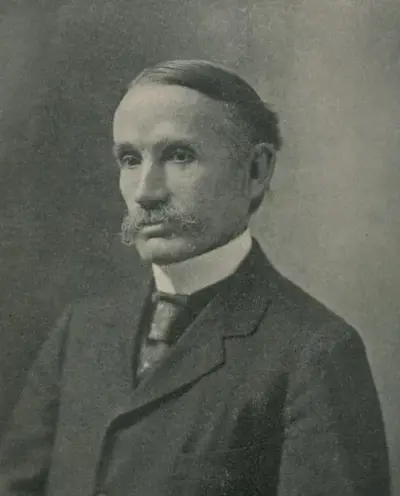
John Bates Clark was an American neoclassical economist. He was one of the pioneers of the marginalist revolution and opponent to the Institutionalist school of economics, and spent most of his career as professor at Columbia University.
