Tim Conway Quotes
If I wouldn't offend my religion or God, why would I want to offend an audience because in effect those people are being watched over by the same person.


This was a remarkable public statement for its time. No other political leader of an Islamic country would dare claim that people have a right to be atheists. Very few would even suggest that people should be free to choose their own religion.

This quotation is sometimes used to show that Washington thought religion important. Most of the founding fathers thought religion both important and potentially dangerous. They had observed Europe tear itself apart over religious differences. Note that Washington uses the words “religious principles” as opposed to “religion” or “religious prescriptions” or “religious doctrine.” The founders were not hostile to the concept of religion—even Jefferson and Franklin saw potential values in religion and religious institutions. They were hostile, however, to letting any particular sect dominate the religious environment of the nation. Nor did they want any of the religions controlling or operating the civil government. See {625616}.

His quotation is a modern, business version of the Ingersoll theme of 1954. See {621722}.


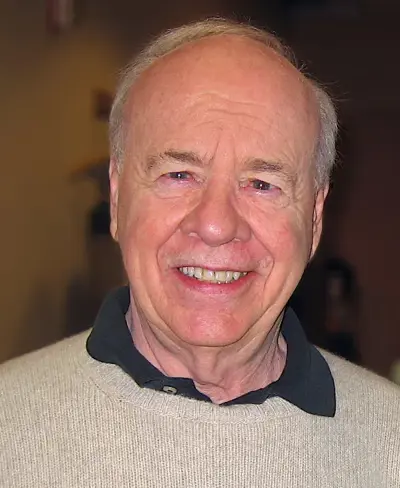
Thomas Daniel "Tim" Conway was an American actor, comedian, writer, and director. From 1966 to 2012 he appeared in more than 100 TV shows, TV series and films. Among his more notable roles, he portrayed the inept Ensign Parker in the 1960s World War II TV situation comedy McHale's Navy, was a regular cast member (1975–1978) on the TV comedy The Carol Burnett Show where he portrayed his recurrent iconic characters Mister Tudball, the Oldest Man and the Dumb Private, co-starred with Don Knotts in several films (1975–80), was the title character in the Dorf series of eight sports comedy direct-to-video films (1987–1996), and provided the voice of Barnacle Boy in the animated series SpongeBob SquarePants (1999–2012). Twice, in 1970 and in 1980–1981, he had his own TV series. Conway was admired for his ability to depart from scripts with humorous ad libs and gestures, which frequently caused others in the skit to break character while attempting to control their surprise and laughter. He won six Primetime Emmy Awards during his career, four of which were awarded for The Carol Burnett Show, including one for writing.
