Henry I Quotes
If any of my earls, barons or other vassals die, their heirs shall not be obligated to redeem their land …., but they shall be put in possession of it on paying a just and reasonable relief.
This early form of estate tax was a very popular act, as inheritors no longer had to pay the full "market price" of the estate to the state in order for the family to continue possession. Thus the estate tax was a welcome alternative for the then wealthy families.
Henry I, 1068-1135, King of England, Charter promulgated upon his accession to the throne
Sourced by: Eigen's Political and Historical Quotations

A fief was an estate of land and people. The man who had the title to the fief was obligated to raise troops from his estates and lead then at the command of the King. Women, under English law could not inherit a fief—it went to the oldest son. However, once the military element of fiefdom was eliminated, Johnson saw no reason why women should no longer inherit feifs and the titles that went with them.

Conservatives have been trying to eliminate estate taxes—sometimes called “inheritance taxes” for years. One of their most effective techniques was to create their own pejorative language to describe estate taxes and then to have all conservatives use that description and never say “estate taxes”. While this shifted public opinion somewhat, the majority of Americans still tended to agree with Sanders and estate taxes remained in force then. The estate taxes only were levied on the wealthiest Americans—less than 2 percent.

The accumulation of wealth of some of the richest families was too great even for this man who was one of the wealthy establishment. He therefore supported an inheritance estate tax, in order to redistribute the income, and put a stop to the accumulation of wealth in only a few families.


Cities operated on an entirely different plane than the rural countryside which was divided up and given to nobles and the peasants on the land were serfs—virtual slaves to the noble. Cities allowed more equality, opportunity, freedom, modernity, and education. However, serfs would vote with their feet and move into cities leaving the princes devoid of their surf labor. The Emperor tried to stave off this trend by preventing the cities from admitting the surfs who were otherwise generally welcome as they, like immigrants classically provided an excellent source of compliant, low cost labor. Ironically, there are third world countries who even in modern times are trying to restrict the immigration of peasants to the cities.


This required much of the population to maintain and bear arms. Another part of the law required the arms-bearers to be at the service of the king and as such was the king's militia.
Prior to that there was no redress any layperson had except to the religious courts. Churches throughout the Christian world excoriated this early separation between church and state, and giving civil courts jurisdiction over the churches on non-religious matters. Thomas Beckett led the English opposition to the enforcement.


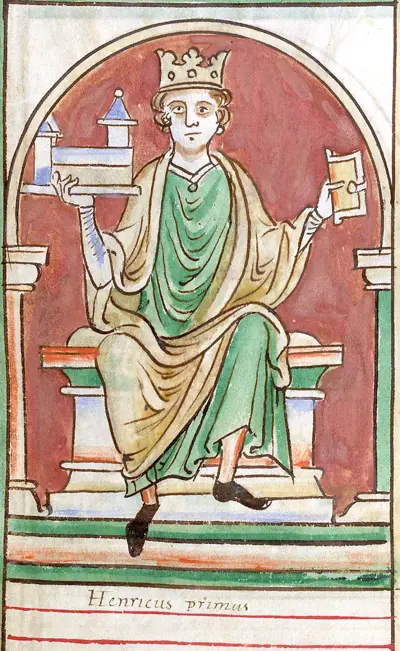
Henry I, also known as Henry Beauclerc, was King of England from 1100 to his death in 1135. He was the fourth son of William the Conqueror and was educated in Latin and the liberal arts. On William's death in 1087, Henry's elder brothers Robert Curthose and William Rufus inherited Normandy and England, respectively, but Henry was left landless. He purchased the County of Cotentin in western Normandy from Robert, but his brothers deposed him in 1091. He gradually rebuilt his power base in the Cotentin and allied himself with William against Robert.
