Henry A. Wise Quotes
I will not nullify, I will not secede, but I will under sovereign State authority fight in the Union another revolutionary conflict for civil liberty, and a Union which will defend it.
Wise, Barton Haxall. The Life of Henry A. Wise of Virginia, 1806-1876. The Macmillan Company, 1899.


While Douglas and Lincoln were political opponents with little love lost between them, both were patriots. And Douglas was committed to seeing that Lincoln was inaugurated and the Union preserved, if Lincoln won the election. When Lincoln did so, Douglas traveled throughout the South trying to persuade Southerners to stay in the Union. See {584870}.

It would be almost 30 years until Jackson would have been proved correct and the Civil War had begun.

Fortunately he was wrong, but the threat of a breakup of the American Union intimidated most members of Congress to avoid anything that would offend a state or group of states. Thus slavery became more and more entrenched till it exploded into the Civil War. At the time the issues of contention included the fact that Louisiana was primarily Roman Catholic and ALL other states were majority Protestant. The territory functioned under French Law—the Napoleonic Code, while all the other states operated under the English Common Law (even today this is so), and there was concern with the French and Creole language and whether the Creoles would fit into American Culture.

Seward, the newly appointed Secretary of State was extremely concerned that if the radical direction that many of the Southern States were moving in turned into a Civil War, that the Union should not be seen as the precipitating initiator. His policy was followed and the secessionist extremists, not so politically sensitive, attacked Fort Sumter and became the initiator of the war so far as public opinion was concerned domestically and internationally. It was very important for the Union effort that the Confederates by seen as a group of radicals rebelling against the authority of a legitimate state. If that was the case, any effort to aid or help the South could be seen as an unfriendly act of war against the United States. Conversely, the South would have liked to be seen as an independent nation, no longer connected to the United States and entitled to diplomatic relations and foreign trade with all other nations. But the attack on Fort Sumter made that position much harder to maintain.
Abraham Lincoln’s major political opponent in Illinois agreed with Lincoln on the criticality of preserving the Union from a split off of the Southern States. He tended to be more willing to pander to the South than Lincoln, however they were strong allies on the fundamental issue. However, what the slavery forces in the south wanted and needed to forever protect slavery was not in the power of any President to do, short of ending the democracy. Slavery was doomed in the long run if there was no way to enforce the Supreme Court’s Dredd Scott decision upon (Northern) states whose constitutions and laws made any slave who entered the state free and whose people would not use its police and legal powers to return runaway slaves. It was the abolitionists who won the majority in the battle of public opinion on slavery. It was only a matter of time when slavery would become untenable in the South. Lincoln was unwilling to force the Northern states to return fugitive slaves against the constitution, laws and will of the people of those states as Buchanan said he was (but had a hard time doing). Also Lincoln was unwilling to allow new territories to enter the union if they allowed slavery.


Bragg and other Southerner leaders had an unusual concept of equality. Ever since the original Constitution, Northerner’s votes counted for themselves only while a single Southerner’s vote counted for all his slaves as well. So the individual Southerner always had more political power than his Northern counterpart. However, this notion of equality reached it’s acme when it came to the new territories. The Southern argument was that Southerners could not equally prosper in the new territories of Kansas and Nebraska if they could not bring their slaves to work the land. The thought that Southerners were equally able to personally work the new lands or pay labor seems to never have occurred to them. If Northerners could prosper that way then Southerners should be equally able to do so also. However, many Southern whites simply could not conceive of a “gentleman” working in the fields. Therefore they would not be equally able to prosper in the new territories.
At the time his Vice President, John C. Calhoun, was expounding a theory of “nullification” by which the states could supersede and nullify federal law in their states. When Jackson finished his toast, it was Calhoun’s turn (See {635896}.) His toast supported the States’ Rights position over the federal government. In those days Presidents and Vice President’s were often political enemies or of opposite parties. The President’s advisors thought that his toast might be misinterpreted. So when they gave the toast to the press as “The Federal Union: It must be preserved.” That was the form in which the press reported the President’s toast and for many years that was the version most quoted even though it was never delivered that way. However Jackson was responsible for both versions.

The words are those of President Andrew Jackson. See {604550}. After occupying New Orleans, General Butler infuriated the Confederate Sympathizers with this act. Jackson was the hero of the Battle of New Orleans and an unapologetic slave owner. The Southerners had erected a magnificent statue of their hero Jackson on horseback in a major section of the city. Butler, then ordered that the Jackson quotation be chiseled in the stone base. The townspeople were furious that this Union General would make up words and attribute them to Jackson; however, when they finally realized that Jackson had actually said those words they felt even more humiliated. There are still a few Southernors who consider this terrible insult to the Confederacy, and of course that is just what Butler intended.
Jackson was reacting to the claimed right of South Carolina to nullify Federal tariffs and other Federal laws.
Soon after Jackson's reelection, delegates from South Carolina, led by John C. Calhoun, moved quickly to declare "null, void, and no law" the Tariff Act of 1832. The president's reaction to the Ordinance of Nullification was swift.


Porfirio Diaz - the longtime dictator of Mexico stole the election of 1910 and had his opponent Francisco Madero arrested and imprisoned. Madero got out, crossed the border to San Antonio, and issued this declaration which started the Mexican Revolution. See {613620} for the statement that declared the Revolution.
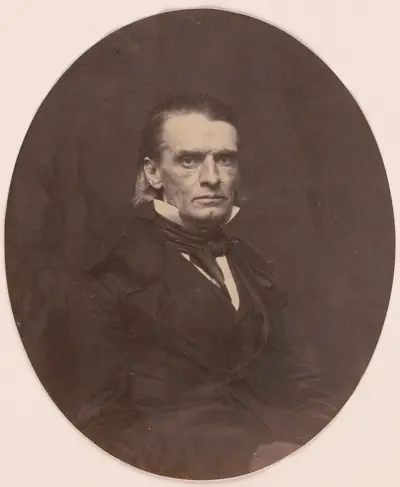
Henry Alexander Wise was an American lawyer and politician from Virginia. He was a U.S. Representative and Governor of Virginia, and US Minister to Brazil. During the American Civil War, he was a general in the Confederate States Army. He was the father of Richard Alsop Wise and John Sergeant Wise, who both served as U.S. Representatives.
