Grover Norquist Quotes
I run a taxpayer group - the most powerful guy in D.C., nonsense. OK? There are buildings with thousands of people in them, all lobbying for more spending and higher levels of spending and more government commitments. And there are a handful - a handful of groups that fight for less spending.
Norquist, Grover. Interview by Steve Kroft. 60 Minutes, CBS, 20 Nov. 2011.


Goldwater was the first Republican Presidential Candidate since the end of WWII who had campaigned for smaller government and reduced government spending. He actually started the modern Republican trend toward campaigning on this theme. Ronald Reagan did a much better job of campaigning on this theme, and all Republican Candidates since have campaigned on these two themes. It is not clear whether the Republicans were actually serious about this or just ran on the themes to please the political wing that Goldwater had started or meant it but were not good enough at running the government to fulfill this promise. Every Republican President from Reagan through George W. Bush increased the government spending and increased the number of government employees—more so than most Democrats ironically. Democratic President Bill Clinton was the only post WWII president to cut spending, produce a surplus and diminish the size of the government bureaucracy. Goldwater was so intellectually honest that had he won, he probably would have done everything he could to implement the policy of smaller government and less spending.


This quotation pithily summarizes a common problem in politics of describing budgets. In most years there has been a national inflation. If a new budget is, in actual dollars, the same as the previous years or a little more, but the increase is less than the inflation level, the agency will not be able to provide the same level of services as the previous year. Therefore services will be cut and those who are politically in favor of more money for the program legitimately describe this as a “budget cut”. Opponents of larger funding increases, also legitimately describe the funding as a “budget increase”. One side refers to what the money can buy and the other, to the absolute dollars spent. This is an example of the classical ambiguity of political oratory.


of requests from conservative Congressmen who want pork projects added to appropriation bills In one of the great ironies of Washington, Dyer was named “Porker of the Year” yet there was no pork placed in appropriations bills that were not specifically requested (insisted upon) by a member of Congress.

Perry was one of a number of politicians who became opposed to deficit spending, and claimed that the public was not interested in the various projects. However, whenever any of these politicians proposed projects or programs to cut, there would be many citizens who would object vehemently. It was precicely because there was a constituency supporting all the government programs that politicians found it so hard to keep spending under control. Indeed, when others suggested terminating spending on programs and projects Perry liked, he objected as strenuously as most others.

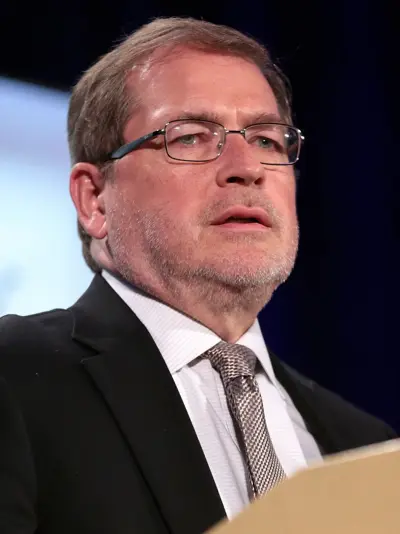
Grover Glenn Norquist is an American political activist and tax reduction advocate who is founder and president of Americans for Tax Reform, an organization that opposes all tax increases. A Republican, he is the primary promoter of the Taxpayer Protection Pledge, a pledge signed by lawmakers who agree to oppose increases in marginal income tax rates for individuals and businesses, as well as net reductions or eliminations of deductions and credits without a matching reduced tax rate. Prior to the November 2012 election, the pledge was signed by 95% of all Republican members of Congress and all but one of the candidates running for the 2012 Republican presidential nomination.
