Chiwetel Ejiofor Quotes
I remember being very affected by what was going on there towards the end of Apartheid. And the subject is still very pertinent, politically, to what's happening around the world today, in terms of negotiating peace talks. I had always been interested in this period of change in South Africa, generally, for a variety of reasons.
Harris, Will. "Chiwetel Ejiofor on Endgame, Children Of Men, and Firefly." The A.V. Club, G/O Media, 24 Oct. 2012.


The Boer war broke out when the Afrikaners of the Transvaal would not give suffrage and equality to the new British immigrants . However, Blacks were in even worse shape in the Transvaal. The British Colonial Minister had urged reform in this arena, but the British had fought an ugly war and settled for a non-Black Reform, platform assuring suffrage and other rights for the white English but assuring nothing for the Blacks. This set the stage for apartheid. In the settlement of the Boer War, England would not prolong the fighting and the casualties to gain civil and equal rights for the Black population which they had argued for and was one of the causes of the war. Just what Chamberlain warned about came to pass.

F. W. De Klerk was the South African Prime Minister & President who worked with Nelson Mandella and the ANC leadership to end apartheid in South Africa. He became a Nobel Peace Prize Laureate.

He was assassinated for his anti-apartheid views and speeches. Most clerics of the Dutch Reformed Church had traditionally supported the Afrikaner colonial view of Black inferiority and apartheid. Heyns was an exception and he was named by Nelson Mandela as a “martyr of his country.”


Helen Suzman, 1917–2009 was a white South African member of Parliament representing Capetown. She came from a Jewish English background and was the leader of the Progressive Party which was the opposition to the Nationalist party that had established the Fascist style Aparteid government where the 10% white population dominated and ruled the 90% black and Asian population. When all the other progressive MPs lost their seats, Suzman was the only member of the South African Parliament who totally opposed the racist apartheid of South Africa. She had little power to change or block Apartheid laws being only a single MP, but her eloquence and vigorous verbal demand for freedom and equality for blacks provided a focal point for foreign boycotts to produce change in South Africa. However, she did not publicly advocate revolution and violence. As a result most of the militant blacks did not value or even follow her activities to end apartheid, and many had no idea who she was. However, Mandela, imprisoned on Robin Island at the time, not only followed her activities, but sent frequent compliments and notes of encouragement to white opponents of the government and apartheid even though many did not support the armed violence that had become necessary to produce change. Mandela knew that there would be core of a white leadership that would favor one-man-one-vote which would make South Africa a black-dominated government when the apartheid Nationalists could be defeated. Mandela was like a great chess player playing a current game but thinking 5 and 6 moves in advance even while in prison. Suzman was one of Mandela’s leading white supporters after the regime change.

All of Europe and the US and the other industrial democracies wanted South Africa to end apartheid and allow majority rule. Many had imposed strong economic sanctions upon the Apartheid nation. Botha, and most of the other Afrikaners, believed that Nelson Mandala and the Blacks were all communists or under the control of the communists, and that ending apartheid would turn South Africa into a Communist Country. Of course that was a paranoid fantasy as all movements for racial or ethnic equality are accused of being communists just as in the American South. When majority rule finally came to South Africa, it showed just how wrong the Afrikaners were as there has been a small communist movement in South Africa which has like the Italian communists functioned but had very little power or influence.


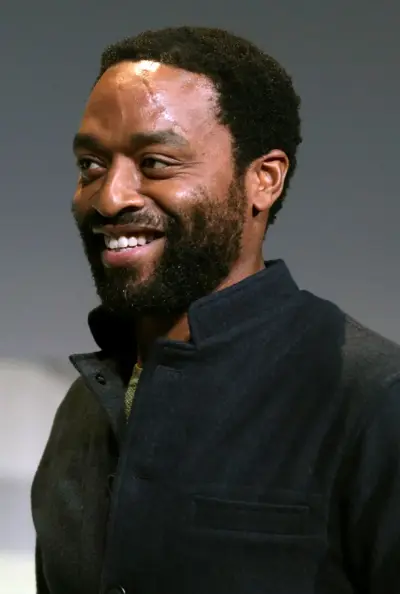
Chiwetel Umeadi Ejiofor CBE is a British actor and filmmaker. After enrolling at the National Youth Theatre in 1995 and attending the London Academy of Music and Dramatic Art, at age 19 and three months into his course, Ejiofor was cast by Steven Spielberg to play a supporting role in the film Amistad (1997) as James Covey.
