Max Boot Quotes
I remain troubled by the deliberate killing of civilians, whether by the United States or by its enemies.
Boot, Max. The Road Not Taken: Edward Lansdale and the American Tragedy in Vietnam. Liveright, 2018.

Hamas had fired thousands of rockets and other missiles at Israeli population centers—war crimes under the Geneva Conventions. Israel finally retaliated against Hamas facilities in Gaza. However, in an unprecedented effort to avoid civilian casualties, the Israeli Defense Forces warned the people by indicating which targets they were going to strike. They also dropped leaflets in Arabic telling the civilians that they are not the targets but to try and avoid harm to them and their families, they should evacuate the neighborhoods that would be under attack. Hamas had placed their missile launchers and other weapons in and near schools, hospitals, mosques and civilian housing risking their civilian population—see {640841}.


The Congresswoman was referring to the fact that the U. S. Defense Department had trained Indonesian military officers who had leadership roles in the massacres and other human rights violations in East Timor in 1999.


There were actually very few incidents of civilian resistance to the German invaders and occupiers. However, they were exaggerated and used as a pretext for what amounted to atrocities and war crimes against the Belgian Civilians.

Germany was the major axis power of which Turkey was a partner in WWI. The Germans could easily have stopped the Turks from their genocidal attacks on the Armenians, but they considered it and chose not to. Likewise, the United States and other neutral nations did not make strong initial protests when the attacks started. Turkey was one of the largest empires of the world then and its Ottoman Empire controlled almost all of the Middle East and its oil.
The Christian Armenians, a minority in Turkey and its lands, were discriminated against like other non Muslim minorities in the Ottoman Empire. But during the Turkish War with Russia and WWI, some Armenians defected and served on the Russian side. Many Turkish citizens took revenge on Armenians by means of murder and torture. Soon, the extermination of the Armenians became the official “Young Turk” government policy. Hundreds of thousands of Armenians were killed outright, and about an equal number were “deported” to special areas. Many died of malnutrition along the forced march of Ethnic Cleansing. Others were murdered as they were deported. No one knows exactly how many Armenians were killed with estimates ranging from ½ million to 4 million. This was the first genocide of the 20th century. Modern Turkish leaders however, are in denial about the Armenian deaths. They claim that there was a war and food was scarce; the only Armenians killed, the claimed were proven Russian agents. They further claim that the Armenian behavior was in large part responsible for the forced deportations because of their lack of patriotism and unwillingness to help the Turkish authorities identify the Russian agents. Most Turks today are unaware of the Armenian Genocide as nothing is taught about the massacres in schools or other institutions. It is against the law in Turkey to even have an intellectual study of the Turkish behavior towards the Armenians, much less publish anything about it.

Turkey, under the control of the triumvirate of the 3 Young Turks had massacred almost all of the Armenian population in the area claimed by Turkey. At the end of WWI, there were many demands that those who ordered the policy of a Turkish genocide and those who carried it out by brought to justice—tried and punished. The Sultan had done little if anything to stop the slaughters although he was very weak, Turkey under the Young Turks had also picked the wrong side and allied with the Germans. The Sultan and his Grand Vizier were trying to pick up the pieces and maintain the Ottoman Empire as best they could despite they the fact that they lost control of much of their vast territory. At the Paris Peace Conference, the Grand Vizier virtually admitted the crimes and committed the Turkish government to determining the guilty and bringing them to justice. He actually had 50 of the worst offenders arrested (See {620595}.). However, there were a few tried and one governor of a province was hanged and a few others received short jail sentences. Talaat, the worst of The Young Turks regarding the genocide, escaped to Germany. But he was tracked by a surviving Armenian who assassinated Talaat. The assassin was acquitted by a sympathetic German court which ruled that the extermination of the assassin’s family had been so traumatic that temporary insanity relieved the assassin of criminal responsibility.


A little over a decade later, it was the conservative President who was condemning Saddam Hussein for gassing his own people and justified the Iraq War in part over that. And in 2007 Saddam having been toppled from power, he was tried for this crimes against humanity with the major charge being his gassing of the Iraqi Kurds. He was hanged for the “liberal hate speech” which had turned into conservative hate speech, but was a correct accusation regardless of which political pole was making it. There were few issues where most Americans were as unanimous as Saddam’s guilt in the gassing of the Kurds with Limbaugh and Saddam’s relatives being about the only people who saw it as propaganda.

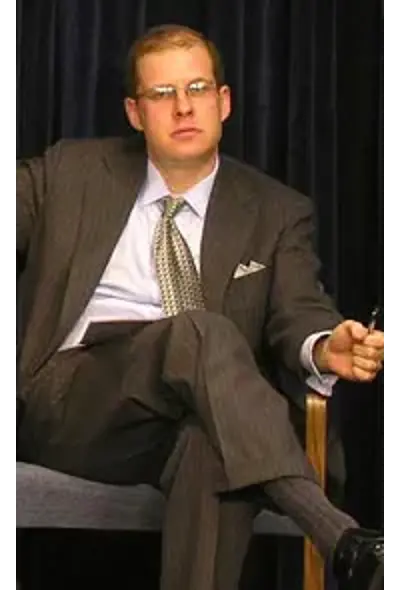
Max A. Boot is a Russian-American author, consultant, editorialist, lecturer, and military historian. He worked as a writer and editor for Christian Science Monitor and then for The Wall Street Journal in the 1990s. He is now Jeane J. Kirkpatrick Senior Fellow in National Security Studies at the Council on Foreign Relations and a contributor to The Washington Post. He has written for numerous publications such as The Weekly Standard, the Los Angeles Times, and The New York Times, and he has also authored books of military history. In 2018, Boot published The Road Not Taken, a biography of Edward Lansdale, and The Corrosion of Conservatism: Why I Left the Right, which details Boot's "ideological journey from a 'movement' conservative to a man without a party" in the aftermath of the 2016 presidential election.
