Emir Kusturica Quotes
I never wanted an independent Bosnia. I wanted Yugoslavia. That is my country.
Kusturica, Emir. Quoted in "Emir Kusturica - Biography." IMDb, IMDb.com, www.imdb.com.


Whenever different ethnicities perceive that they are in a “zero sum game” situation where one group cannot benefit without detriment to others, the situation is always unstable and usually explodes as when Yugoslavia broke apart at the end of the 20th century after being held together by a strong leader, Tito. Note that there was a different spelling of Yugoslavia in the 1920s. The pronunciation was the same.


This quotation is a good illustration of a practice that existed in the age of Empire where two or more large powers would agree among themselves as to which one of them had the right to seize a smaller power, not part of the compact.

When the former Soviet republics were in the Soviet Union, ethnic Russians were often against their will forced to the Republic so it can be Russified. These ethnic Russians had higher status with the Soviet government and the local people resented them for that and for trying to change their culture. With the breakup of the Soviet Union, many people took out their resentment on the ethnic Russians by various form of official and unofficial discrimination. For example, in 2014 when the Ukrainians revolted and ousted the pro-Russian President, the new legislature, as one of its first acts, banned the use of the Russian language on schools and in all official government forms and activities. Although the new President vetoed the ban and it never became law, the vast majority of the legislators would gladly discriminate against the ethnic Russians legally as well as socially and personally. The Russian government, decided to be the “protectors” of the ethnic Russians. This conveniently also gave them a “justification” of seizing and annexing the Crimea which had been part of Ukraine.


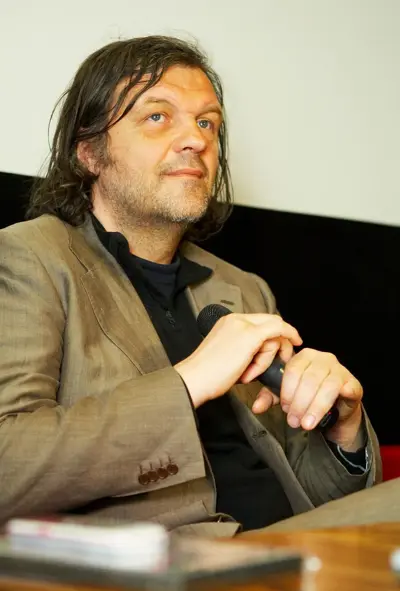
Emir Kusturica is a Serbian filmmaker, actor and musician. He also has French citizenship. He has been recognized for several internationally acclaimed feature films, as well as his projects in town-building. He has competed at the Cannes Film Festival on five occasions and won the Palme d'Or twice (for When Father Was Away on Business and Underground), as well as the Best Director prize for Time of the Gypsies.
