Jonathan Swift Quotes
I never saw, heard, nor read, that the clergy were beloved in any nation where Christianity was the religion of the country. Nothing can render them popular, but some degree of persecution.
Jonathan Swift, 1667-1745, Irish Satirist and Protestant Cleric, Dean, Dublin Cathedral, Thoughts on Religion
Sourced by: Eigen's Political and Historical Quotations

Toleration is a relative term. The Muslim Moors made Christians (and Jews) pay a special tax. At times they were forced to wear special clothing so that they could be readily identified. And they could not build churches larger or taller than the smallest mosque in the community. At times, their occupations were restricted but at other times Christians and Jews were appointed to the highest positions like Vizier. The Inquisition, in contrast, forced all Muslims (and Jews) to leave the country without any of their property or money or be tortured and killed—usually by burning at the stake unless of course that they converted to Christianity.

The implication of a double moral standard for adherents of the faith and for others has been characteristics of many religions.


Williams was the first theologian who not only advocated religious toleration but argued that Christianity demanded it and the separation of church and state.

Many Protestant Englishmen were shocked to hear this, having little familiarity with the details of the functioning of the Church of England—the Established Church of Great Britain—in Ireland and the contribution of the Church to the discrimination against Irish Catholics and the poverty of Ireland.
_0_thumbnail_47x47.jpg "Statue of Robert Hall in Leicester.")
Many of the founding fathers were aware of such views in England as the same issues were being debated in America in the debates on Ratification of the Constitution and the required inclusion of the Bill or Rights—specifically the First Amendment.

Executed by the English for his part in the Easter Uprising. His observations seem even more prescient as later theocracies like Iran ruined their societies and progress and twisted the Islamic religion. Ireland’s independence did not separate the state from the control and influence of the Roman Catholic Church despite the warnings of Connolly and others. However, conflict with the Church in 2010 over the church sexually assaulting children and impeding the civil authorities from investigating and protecting the criminals led to a reexamination and a diminution of the role of the church in Ireland.


This is a particularly interesting historical quotation because it succinctly gives a history of the various horrors of religious strife in British history—a history that was very well known to the American Founding Fathers and the general American Colonial population. This history was the major driver behind the public insistence for the Bill of Rights and the 1st Amendment which erected a wall of separation between church and state with government never favoring or abetting any particular religion.

In one of the historical ironies of the 12th century, a Christian sect preferred the rule of the Muslims than their Christian brethren—on the grounds of religious tolerance. It illustrates the changes that take place over time. By the 21st century, it was the Christians who were thought of as tolerant and the Muslims as the opposite.


What the historian did not know was how similarly the Protestants would behave against the Catholics when they had the power. Since the Catholics were the established church, and the Protestants the new “heretics” the Protestants were on the receiving end of most of the atrocities at the beginning. However, as if they had been scholled by their horrible experiences, they repeated them just exchanging the perpetrators and the victims.
The letter was in response to the King’s letter commanding him and all the other governors to massacre all the Protestants in his district. Montmorrin, a Catholic, died suddenly and shortly thereafter. It is supposed he and one other objector (Viscount Orthez) were poisoned by order of King Charles. All the other governors obeyed and 50,000 Protestants were murdered in the Massacre of Saint Bartholomew.

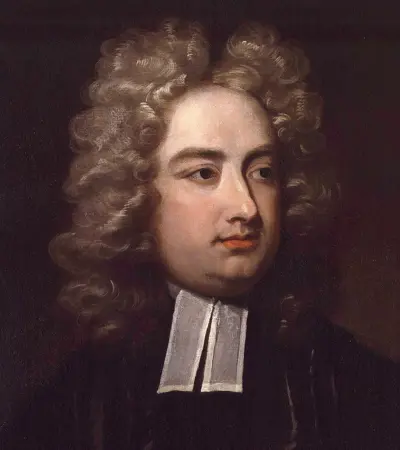
Jonathan Swift was an Anglo-Irish satirist, essayist, political pamphleteer (first for the Whigs, then for the Tories), poet and Anglican cleric who became Dean of St Patrick's Cathedral, Dublin, hence his common sobriquet, "Dean Swift".
