Desmond Tutu Quotes
I have been to the Occupied Palestinian Territory, and I have witnessed the racially segregated roads and housing that reminded me so much of the conditions we experienced in South Africa under the racist system of Apartheid.
Tutu, Desmond. "Apartheid in the Holy Land." The Guardian, 29 Apr. 2002.


At the time, some Palestinian Arabs claimed exclusive rights to the territory on the grounds that Arabs had dominated the area for the longest period of time. They gave no credence to the fact that the Jews had dominated the area and it was the center of their kingdom for many years before—that Jews had constantly lived in the area of longer than the Arabs, nor did they give any credence to the fact that the Christians had conquered the area from the Muslims during the Crusades.


The Jewish and American perception at the time was that the Arabs of Palestine were nomadic tribes who trekked through the countries of the Middle East without any national allegiance to any nation including the Ottoman Turks who before WWI ruled the area. However, there were also a small number of Arabs who had settled on fixed land, operating farms and olive groves. They were not nomads, and while not attached to a nation were very much attached to the land. Those families, who did not fight the Jewish right to establish a Jewish state, still possesses, work, and live on those traditional lands. Those who fought against the founding of Israel in 1949 and those who followed 14 Arab armies’ military instructions to evacuate their lands so the military could shell and bomb the Jews and were promised the land and goods of the Jews after their defeat, became refugees who would never be integrated by the 14 Arab nations whose requests they followed.

At that time Jews in Palestine were in the minority. The issue of how to obtain the land was hotly debated amongst Jewish groups. Jabotinsky was at one extreme—colonize and take the land just as the Arabs had done to the Jews when there was a Jewish majority. His view did not however prevail. The policy was to buy the land from individual Arabs and Jewish land up to 1948 was obtained that way. In that year the UN partitioned Palestine and 11 Arab armies attacked the new state of Israel and asked the Arab civilians to leave the area so that the Army could cleanse it of Jews. Many did not, and they or their descendants are still on their land or have sold it. The Arabs who left, were suspected of being possible collaborators or terrorists, and they have never been paid for their land or allowed to return. Compensation is still in dispute. At the same time Jews driven out of Arab countries by law and the military have never been compensated or given any right of return either.
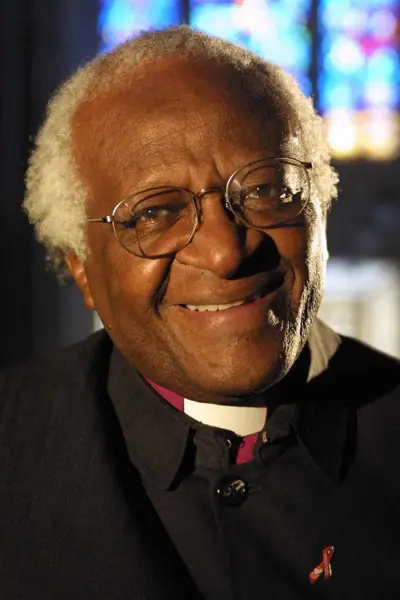
Desmond Mpilo Tutu OMSG CH GCStJ is a South African Anglican cleric and theologian, known for his work as an anti-apartheid and human rights activist. He was the Bishop of Johannesburg from 1985 to 1986 and then the Archbishop of Cape Town from 1986 to 1996, in both cases being the first black African to hold the position. Theologically, he sought to fuse ideas from black theology with African theology.
