Harold Ford Jr. Quotes
I expect the Republicans will enjoy a large bounce out of their convention. They're here wrapping themselves in the 9/11 flag, which I think is inappropriate in many ways, but it's their choice.
Ford, Harold, Jr. Interview. Fox News, Fox News Media, 2004.


The Republican convention delegates tended to be older than the Democratic convention delegates.


Indeed Senator Thomas Collier Platt, in cooperation with major New York corporations, was leading just such an effort. See {624063}. However, many close friends and supporters wanted him to do for the national ticket what he had done for New York—reform. These schemes succeeded beyond the proponents’ wildest dreams when President McKinley was assassinated, and TR was the President. His enemies however were crestfallen—Party leader Thomas Collier Platt was very distressed. See {585078}.


Suggested warning label for political advertising:


between the liberal and conservative wings


Political Parties go through transformations. In the 1950s the Republican Party had a core that was viciously attacking opponents and calling them Communists and traitors. In the early 21st century, their concern for the National Interest again was dwarfed by the desire to win and hold power, only this time intentional gridlock was added to the slanders. The Democrats have gone through unpatriotic ethical lapses as well. Parties are dynamic and change.
The nation was facing the scourge of McCarthyism. Senator Smith was the most courageous member of the Senate in denouncing the lying demagogue of her own party who was so powerful at the time—Joseph R. McCarthy. At the same time, there were some communists trying to undermine the values or the nation as well as the fascists. Smith was one of the first to recognize the danger of both.

The Republican candidates were campaigning for the Primary election in Illinois. Lincoln was the first and the greatest of the Republican Presidents and a great liberal. The Republicans used to be the more liberal of the two American major parties and even referred to themselves as “radicals.” However the political parties flip flopped over time and in the 2012 primary campaign the Republican candidates were outdoing each other to show who was the most conservative and could trash liberals the most. Pointing out this contradiction between the politics of the first and most popular Republican President and the then current crop of contenders was a little embarrassing to some Republicans and a powerful anti-current Republican message to independents and Democrats.

In 2012, the Republicans were a very narrow party; almost all Republicans were quite conservative. In contrast, the Democrats had conservatives, liberals and socialists at the same time. When the Democrats accomplished something, if they talked much about it, the conflicts within the party would be ripped open and there would be democrats attacking the democratic accomplishments along with the Republicans. Historically, it was not always such. In the 1940s for example, it was the reverse where the Republicans were generally more quiet about their accomplishments than the Democrats who were divided only on race relations and civil rights and unified on most else.


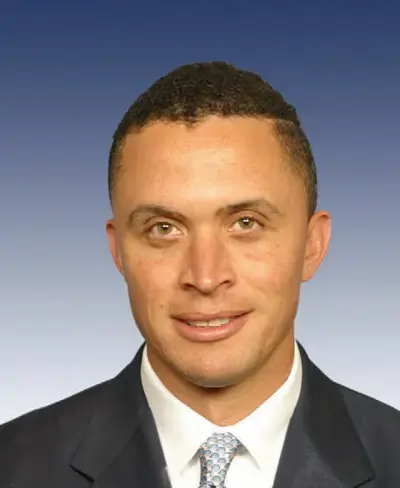
Harold Eugene Ford Jr. is an American financial managing director, pundit, author, and former U.S. congressman who served from 1997–2007 in the United States House of Representatives as a member of the Democratic Party from Tennessee's 9th congressional district, centered in Memphis. He is the son of former Congressman Harold Ford Sr., who held the same seat for 22 years. In 2006, Ford made an unsuccessful bid for the U.S. Senate seat vacated by retiring Bill Frist. He is a member of the Ford political family from Memphis. Ford was the last chairman of the Democratic Leadership Council (DLC).
