Brad Garlinghouse Quotes
I don't think central banks are going to give up fiat currency anytime in my lifetime.
Roberts, Daniel. "Ripple CEO: Crypto isn't replacing fiat currency." Yahoo Finance, Yahoo!, 8 Feb. 2018.


FDR was then a candidate for the Democratic Vice Presidential Nomination. This statement shocked some of the conservative French and British delegates and officials such as Ramsay MacDonald, Georges Bonnet, and Neville Chamberlain, but economist John Maynard Keynes strongly approved of Roosevelt Roosevelt’s statements. At issue was whether or not the major currency powers should confer frequently and set the international currency exchange rates or should the rates float and be determined at any point by the free market in currency. FDR held the latter view which was opposed to the positions of the conservative banker-oriented delegates from the European counties, However Roosevelt’s statement was considered “harsh” and “vituperative” by the conservatives and the entire conference collapsed over them. FDR admitted that perhaps he had been too strong and blunt in his language. An irony of this quotation is that 80 years later the positions of liberals and conservatives had both flip-flopped. It became the conservatives who adopted the FDR free market for currency exchange while many liberals called for government intervention and agreement on exchange rates to prevent instability.

At the time any private bank could issue their own money. Private sector bankers thought it outrageous that the Congress should consider trampling on their rights to issue money. The solution that was finally adopted some years later was to use the Federal Reserve Board to control the money supply. It is independent of the Congress and the President but members are appointed by the President and confirmed by the Senate. Our system, like no other system, is a compromise where neither the Government or the Private Sector controls the American money supply.


The very act of printing money created a debt—at the time and until the Nixon Administration which went off the gold standard—the government owed the gold or silver and the spicie—the printed money—was a promissory note.


Stamp was a banker and the 2nd richest man in England at the time. Yet he warned about aspects of banking that needed reform and regulation.


The same argument can be made against the modern paper money supply. What Jefferson and most of the founding fathers, with the exception of Alexander Hamilton. did not realize was that the major stability of any kind of money was not only the silver or gold that backed it but the political and legal stability of the nation and the size of its productive economy. Where Jefferson was right however is that all these banknotes at the time were issued by local private banks. The Government had no responsibility for paper money and had no knowledge of how much paper money any bank issues and whether or not they had any silver to back it up. Banks didn’t trust other bank’s notes and would only redeem them at a discount. A $10 note from a South Carolina bank might only be worth $7 in New York and $6 in Boston. The early American monetary system was a mess.


This was a very astute prediction. At the time, the United States gold mining production was second only to South Africa and American currency was based on the gold standard which seemed to all to be permanent. Half a century later, the U. S went off the gold standard.


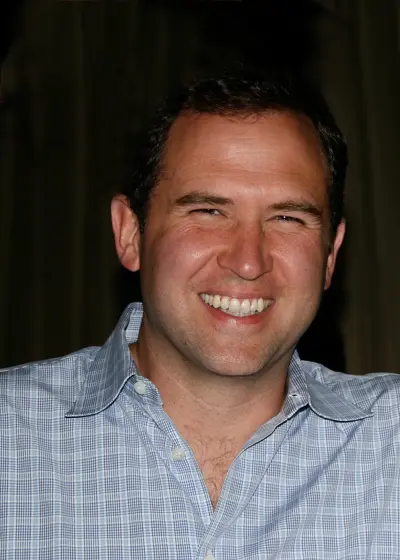
Bradley Kent Garlinghouse is the CEO of financial technology company Ripple Labs. He previously was the CEO and chairman of Hightail (formerly YouSendIt). Before Hightail, he worked at AOL and Yahoo!
