Edward Grey Quotes
I do not believe for a moment that, at the end of this war [WWI], even if we stand aside, we should be able to undo what had happened … to prevent the whole of the West of Europe opposite us from falling under the domination of a single power … and we should, I believe, sacrifice our respect and good name and reputation before the world and should not escape the most serious and grave consequences.
1st Viscount Grey of Fallodon. He was advocating British entry into WWI in defense of the Neutrality of Belgium as was their treaty obligation.
Edward Grey, 1862-1933, British Foreign Secretary, Ambassador to the United States, Speech to the British House of Commons when Germany moved its troops into neutral Belgium, 1914
Sourced by: Eigen's Political and Historical Quotations


In both the First and Second World Wars the Western nations had a multilateral defense pact which did little good in the face of German aggression.

This is the kind of threat that was used by Germany before the First World War. It worked with Turkey, but King Albert realized that being an “ally” of Germany meant losing independence anyway. Belgium would not join Germany, so the Germans invaded Belgium in 1914. Belgians fought with the allies and at the end of WWI, they were able to rebuild their independent state and thrive until they were again invaded by Germany in WWII. Turkey, in contrast, lost their entire empire, as a result of their fighting as German allies in WWI.

The Times regretted that the Germans did not speak to the Austrians more vigorously when they were threatening to attack Serbia who harbored anti-Austro-Hungarian terrorists (see {642085}). What the Times editors did not realize was that the Germans had already made their war plans (see {642092}) and the Serbian issue was just the justification they needed to implement them. So there was no real reason for the Germans to discourage the Austro-Hungarian Empire from its mission to punish Serbia.
1st Viscount Grey of Fallodon. He was advocating British entry into WWI in defense of the Neutrality of Belgium as was their treaty obligation.


See the American ambassador’s assessment after the war began {41089}


This was the classic German method of invading a neutral country. First they claim that they have good information that their enemy, in this case France, is going to March through Belgium to attack Germany. Then they state that the Belgians are too weak to prevent this breach of their neutrality. Therefore, Germany as an act of “self defense” must send troops into Belgium to repel the French. The Belgians of course objected and stated that they would maintain their neutrality (see {613959} ) but the Germans then invaded the next day and could not understand why the world considered it aggression.

FDR was right about Russia being a major factor in stopping Hitler, but partially wrong about the danger of Russia. The Soviets never did dominate Europe although the tried, but they did dominate Eastern Europe.

The Lusitania was an American passenger liner that was torpedoed by the German U-Boats. Edith Cavell was a British nurse who was assisting all wounded in Belgium, and Captain Charles Fryatt, was an English Merchant Captain who when his ship was attacked by a German submarine, fought back and rammed and sank the sub. In each case the German behavior was contrary to the then norms of civilized warfare.

Germany had demanded that Belgium allow German troops to cross Belgium to the French frontier. However, King Albert was concerned that this would be a de facto German occupation of Belgium and asked for help. The British tried diplomacy but things were out of anyone’s control and the First World War ensued.

Germany had just attacked Russia with whom it had a treaty. For a while, Hitler paid little attention to Italy and just gave their “ally” orders and instructions. Italian public opinion was concerned about the same question. See {627973} .
This quotation is important for two reasons. First, it shows that there was a very hostile environment in Europe well before the assassination of the Archduke of Austria that “triggered” WWI. Second, that the Germans were racist before Hitler ever came on the scene. The Emperor demagogued the issue and took it to new extremes, but the evil was there. To the Germans, the Slavs and Russians were a lesser form of humanity than the Germans. The Austrians were threatening to attack Serbia and Russia. The Austro-Hungarian Empire, ruled many ethnic Slavs, Russians and Muslims—the lower forms of humanity—and long before Hitler, Wilhelm and other leading Germans thought that the Germanic Peoples should rule that part of the world as the lesser “races” were not fit to rule.

The Ambassador of Bavaria represented an area where the politicians saw democrats and socialists as their great enemy, as did many of the leading right wing conservatives in all of Germany. They believed that a great war would give them a chance to crush democratic socialism in Europe. Bethmann warned that just the opposite might result, and indeed it did. He was correct. Many of the crowned heads of Europe were deposed and the democratic socialists emerged as a major political factor in the victorious democracies. Bethmann-Hollweg, however, was not a strong leader and could not prevent the Conservatives, the military leaders, and Kaiser Wilhelm from initiating WWI.
The Hapsburgs were the ruling family of the Austrian Empire who wanted to invade Serbia in retaliation for their complicity in the assassination of the Austrian Archduke. This would likely bring Russia in the war in support of Serbia. The editor thought that there was no obligation to support Austria when they were planning a war of choice. What the editor did not know was that the German leadership very much wanted war at the time and supporting Austria was the perfect excuse to fight without them starting the conflict. However, the evidence became clear later than it was German aggression that turned the dispute into a World War.

German ally, the Austro-Hungarian Empire had declared war on Serbia. See {642085}. The Russian Czar was under great pressure because a large Roman Catholic Empire was warring against a small Orthodox co-religionist of Russia and Russians of all classes wanted Russia to defend Serbia. The Czar was making a good faith effort to stave off the war. What he did not realize was that Germany had actually planned for war against Russia and France and was using the alliance with Austria as an excuse.
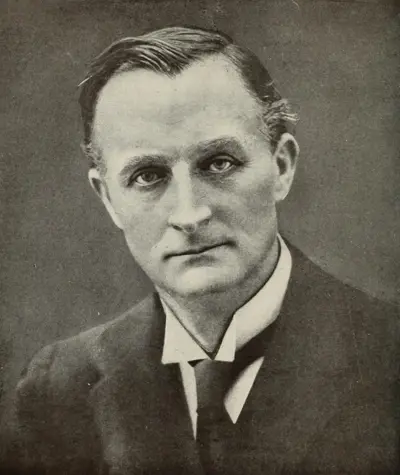
Edward Grey, 1st Viscount Grey of Fallodon, KG, PC, DL, FZS, better known as Sir Edward Grey, was a British Liberal statesman and the main force behind British foreign policy in the era of the First World War.
