Kareem Abdul-Jabbar Quotes
I became totally disillusioned with Catholicism when I discovered the role of the Catholic Church regarding slavery.
He had been born and brought up as a Roman Catholic but converted to Islam. The Catholic Church was for much of European History, the Government or a co-equal of Government in terms of power. As such it primary not only represented the power structure was the power structure and tended to always support the status quo. In America, the Catholic Church was also in a complicated situation. There was extensive anti-Catholic bigotry and sentiment in early America some of which still exists. The South with its poorer level of education and its protestant fundamentalist bent was the source of a disproportionate level of anti Catholicism. The Catholic hierarchy chose not to make a moral issue out of slavery and stayed away from abolitionist coalitions in order to curry favor and have Catholics seen in a favorable light by slave owning southerners who were the power elite. Like the Pope choosing not to combat Hitler given all the German Catholics, the Church generally supported slavery.
Kareem Abdul-Jabbar, Athlete, Historian & Author, Interview, C-SPAN Book TV, July 16, 2007
Sourced by: Eigen's Political and Historical Quotations


While this apostolic letter condemned the slave trade, it fell short of clearly implicating the entire practice of slavery. It is clear that the Catholic Church at this time was reluctant to abandon its earlier teaching which approved of “just title” slavery. This distinction approved of “slavery” in circumstances in which the person was deprived of their liberty justly. Specific examples in the past have included slaves captured in war, persons condemned to slavery for a crime, and those who sold themselves into slavery.


He is often referred to as “of Lahore.” He was a much better theologian than a historian. His credit of Islam with the principles that would end slavery, ignored the fact that just as American founding fathers espoused equality and freedom yet some owned slaves, likewise Mohammed, the founder of Islam, was a slaveholder. Historically, long after most of the world had abolished slavery, it still existed in the Islamic nations. They were forced out of the African slave trade by the European powers in the 19th century. But slavery was legal in Saudi Arabia as late as the 1960s. Slavery was still practiced in Sudan in 2005 with Muslims attacking Christians and Animists and taking them as slaves despite the official laws banning such practices. The government itself aided the slavers. Also, although Islam is credited with a major assault on slavery, it was not slavery per se that Muhammad banned. It was the slavery of another Muslim. Sharia and the Koran allows slavery so long as the slave is an unbeliever.

In the early stages of Islam, Muhammad had hoped to convert the Jews and others on the Arabian Peninsula. When they refused to be converted, he warred against them usually killing the men, and taking the women and children as slaves. The result was that non-believing tribes were “cleansed” from the Arabian Peninsula. The Muslims at the time preferred children as slaves. For then they could convert the children against their will. Adults in Islam must accept Islam in order to convert. Children are regarded as having no such maturity of decision making and therefore opposition to conversion may be ignored and they may be forced. Critics of Islam and those who argue that Islam is at odds with all other religions point to this quotation. They claim that it is the only religion whose founder and fundamental scriptures demand war against others for no other reason than that they believe in a different religion. The Catholic Church during the Crusades and the Inquisition had a similar philosophy as did Christian missionaries colonizing Africa later. One difference is that most Christians today repudiate the doctrine as against the true spirit and teachings of Christ and view it as historical error, while very few modern Muslims repudiate this quotation of the Prophet.

While this was his opinion, it was never issued in a Papal Bull or had the force of Catholic law. Meanwhile, almost all of the socialist movements in the West have had Catholics in their leadership and many democrats of modern times would have been considered socialist. Many countries with high proportions of Catholic voters have elected socialist governments in secluding Spain and Italy.

These Christians are hard-line missionaries who have inserted themselves into Islam like a parasite.
This is an important quotation because it reflects the extreme Muslim antipathy toward non Islamic missionaries. An Islamic theocracy like Iran gets itself in a bind over missionaries because Islamic law (Sharia) which they follow requires the Death Penalty for ANY Muslim who converts to another religion. There is no opportunity for repentance; death is required. Of course, modern and reformist Muslims do not follow this Koranic requirement any more than Christians and Jews today will execute for Heresy or Adultery as is required in their Bible. The lack of balance illustrates a very difficult problem other religions have in dealing with Muslims. Christian missionaries who convert Muslims are “parasites.” Muslim missionaries who convert Christians are doing the will of God.

One might think that this remarkable pronouncement would have put an end to Catholic participation and support of slavery. However, in an exercise of theological hair splitting, the Southern Catholic Bishops of the United States took the position that In Supremo outlawed Catholic participation and support of slave trading but not the institution of slavery itself. See {617544} for their official position to the United States Government.


Damn this world, Damn this time. Damn this fate That uncivilized Arabs have come to make me a Moslem
This is a huge epic poem that he wrote over several years. At the time, the Persians considered themselves far more civilized and sophisticated than the Arabs who were but tribesmen. They really resented the fact that it was the Arabs that brought Islam. And before, most of the Persians worshipped Zoroaster. Although Islam spread faster and further than any religion in history, it was not always easily accepted as this stanza of the poem indicates. There is to this day a superiority that the Iranians perceive over the Arabs. And to this day, many Arabs resent the Iranians for this attitude.

The origins of the extreme religious intolerance of Spain occurred centuries before the excesses of the Spanish Inquisition. Before the Conference the Visigoths and their king had been converted to Christianity but not all cared for the new religion.
The Protestant Clergy issued similar statements. This was one of the few areas of agreement.


In Supremo {617632} condemning slavery
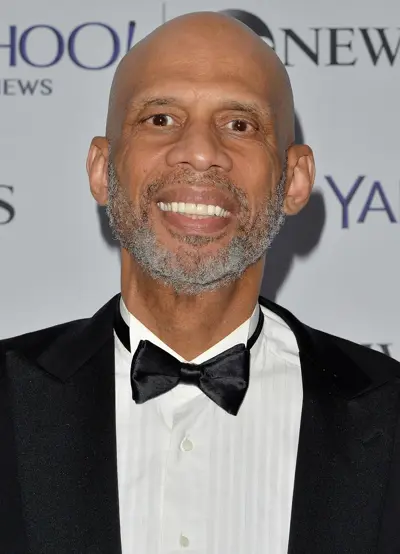
Kareem Abdul-Jabbar is an American former professional basketball player who played 20 seasons in the National Basketball Association (NBA) for the Milwaukee Bucks and the Los Angeles Lakers. During his career as a center, Abdul-Jabbar was a record six-time NBA Most Valuable Player (MVP), a record 19-time NBA All-Star, a 15-time All-NBA selection, and an 11-time NBA All-Defensive Team member. A member of six NBA championship teams as a player and two more as an assistant coach, Abdul-Jabbar twice was voted NBA Finals MVP. In 1996, he was honored as one of the 50 Greatest Players in NBA History. NBA coach Pat Riley and players Isiah Thomas and Julius Erving have called him the greatest basketball player of all time.
