Pablo Casals Quotes
I am Catalan. Catalonia had the first democratic Parliament much before England. And it was in my country where there was a beginning of united nations. At that time—the eleventh Century—they met in Toulouse—today in France—to speak about peace, because the Catalonian people of that time were already against war. That is why, the United Nations, which work only for the ideal of peace, are in my heart, because everything relating to peace goes directly there.
Catalonia while technically a part of Spain, has its own culture, language, people, parliament and flag. In earlier times Catalonia was an independent country, and many there think it still should be independent.
Pablo Casals, 1876–1973, Cellist & Conductor, Speech before the United Nations Assembly when receiving the Medal of Peace, October 24, 1971
Sourced by: Eigen's Political and Historical Quotations


It is not our business to collect trophies but to try … [to] bring back the world to peaceful habits
Many in England and the other allies wanted to punish France for their aggression under Napoleon by barring France from the Concert of Europe—an informal institution of the major powers of Europe. Castlereagh’s view prevailed and France was included.


Son of John Jay. Father of Harriet Beecher Stowe and Henry Ward Beecher

Actually drafted by Secretary of State, John Foster Dulles

This was in the middle of the Cold War and the political leaders had to face the fact that their major military nuclear weapons, as a practical matter, could not be used. The result was not only too destructive but retaliation would produce MAD: Mutually Assured Destruction.


When he made this statement, the United States was the only nation that had the atomic bomb, but he and other leading nuclear scientists realized that it would not be long before the Russians would also have nuclear weapons, and other countries would so follow suit. He and some others saw a world government as the best way to cope with the nuclear proliferation problems. However, there was too much diversity of values and political ideology in the world to be accommodated in a single government, and the United Nations was the only thing that was practical and that was far from a government and had virtually no sovereignty. However, during the Cold War, Russia and the United States agreed on a Nuclear Proliferation Treaty and most nations of the world, agreed, so that for the issue of nuclear proliferation, the world had a type or world government—an international treaty. However, India and Pakistan did not adhere to it and developed nuclear weapons and North Korea was never a signatory. Other countries like Iran began to evade the treaty and since there was no real world government it was difficult to enforce the treaty throughout the world.

She was instrumental in forming the United Nations, but one of its weaknesses was and has been since that it was very difficult and cumbersome for the UN to mount a military force to defend a country or region against aggression. The situation has not improved much on that score since 1948. Israel had just been created by the United Nations, but over a dozen Arab State armies attacked the fledgling Jewish nation. The Israelis, against all odds, not only defended their territory but were able to seize key Arab military and strategic areas. Mrs. Roosevelt, and most of the world, assumed that under the circumstances, the Arabs would negotiate a peace treaty with Israel to regain their land. However, the Arab nations would not recognize the State of Israel and would not even negotiate with the Israelis. ER and most of the world was wrong. Instead, the Arab nations’ strategy was to have a cease fire and build their military strength to attack later in greater force. When that also failed and Israel won the subsequent wars, the Arabs then turned to Terrorism. 60 years later, the Israelis and the Arabs were further apart in many ways than in 1948.

3rd Earl Russell of Kingston. The military weak nations agreed with him, but the militarily strong ones did not—especially America and England which had the Atomic Bomb when others did not.
The Russian motivation for going to the aid of Serbia when the Austro-Hungarian Empire attacked that country was religious affinity. Both were of the Orthodox Church and the Orthodox Slaves had historically been attacked by the Roman Catholic Teutons. Russia had exercised hegemony over regions outside of Russia where there were Christian Orthodox co-religiouists.


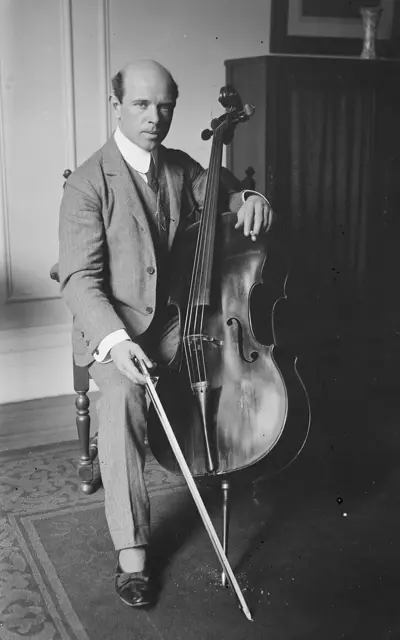
Pau Casals i Defilló, usually known in English by his Spanish name Pablo Casals, was a Spanish (Catalan) and Puerto Rican cellist, composer, and conductor. He is generally regarded as the pre-eminent cellist of the first half of the 20th century and one of the greatest cellists of all time. He made many recordings throughout his career of solo, chamber, and orchestral music, including some as conductor, but he is perhaps best remembered for the recordings of the Bach Cello Suites he made from 1936 to 1939. He was awarded the Presidential Medal of Freedom in 1963 by President John F. Kennedy (though the ceremony was presided over by Lyndon B. Johnson).
