Paul von Hindenburg Quotes
I also believed that our public at home would be strong enough to survive even the present crisis.
Hindenburg, Paul von. Out of My Life. Translated by F. A. Holt, Harper & Brothers, 1920.


Different presidents have had different points of view on the issue of government spending for defense and national security. At the other end of the spectrum was Ronald Regan whose huge increase in defense spending far exceeded the resources we had to pay for them so he increased the national debt by more than all previous administrations put together. Although the burden of that debt was with us for years, slowing the economy, many historians credit this policy with hastening the collapse of the Soviet Union which could not keep up the arms race in the Cold War.

The Chairman of the Federal Reserve Board, creatively found alternatives that the Fed had never used before and almost all experts did not even realize that were possible. He and Treasury Secretary Paulson, almost certainly saved the American system of capitalism. But in the process, they in the early stages and Bernanke throughout the crisis took a number of steps to save the system where the very people and companies whose actions had triggered the entire crisis seemed to personally benefit while most Americans were hurt badly and none of them received any immediate personal benefits the way the large bankers did. The amount of money that Bernanke and his Federal Reserve Board associates spend was staggeringly large and that too distressed many Americans. Almost all of the money was actually returned to the taxpayers as a result of the work of the Fed and the Treasury officials, but no one could feel good about the unfair disparity that had so benefitted much of Wall Street particularly and Main Street and the rest of American only generally while so many lost their jobs, their homes, their dignity and their hopes. Only the big banks and bankers also got a personal huge windfall of taxpayer money and took no risk for that. The alternative would have ruined everyone and even have been worse for the average citizen.


A minority group of very conservative members of the House of Representatives had decided to hold America’s full faith and credit and the economy hostage to implementing their minority proposal to reduce government spending more than the majority wanted shortly after the 2012 election where the voters had rejected the conservative position. None the less, they were threatening to force the government to default and not pay for the items that the Congress had previously already approved by not approving a debt ceiling increase. The President was determined not to negotiate with “hostage takers” and making sure that America paid its bills for the money spent as authorized by Congress.


Beaumarchais had loaned the Americans ½ million French Livres. However, Beaumarchais served the French King Louis XVI as a spy and advisor on foreign affairs. The money had been secretly provided by the French government to help the American cause while still being able to officially deny to England that they were in any way involved in the rebellion. The American agent, Silas Dean, who arranged for the money saw through the ruse. See {624187} regarding the transaction. It was the first material aid that the French provided. Much more followed without which the American Revolution might never have been successful.
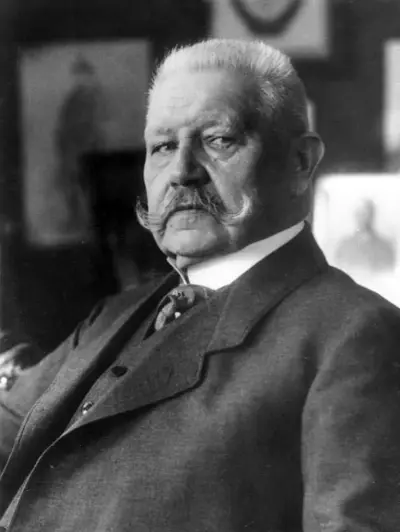
Paul Ludwig Hans Anton von Beneckendorff und von Hindenburg, was a German general and statesman who led the Imperial German Army during World War I and later became President of Germany from 1925 until his death in 1934. During his presidency, he played a key role in the Nazi seizure of power in January 1933 when, under pressure from advisers, he appointed Adolf Hitler as Chancellor of Germany.
