John C. Calhoun Quotes
High duties have no pernicious effects and are consistent with the genius of the people and the institutions of the country.
John C. Calhoun, 1782-1850, Vice President of the United States (Democrat, SC), U. S. Congressman & Senator (Democrat, SC), Congressional Debate, December 4, 1812
Sourced by: Eigen's Political and Historical Quotations

At that period of American History, the Republicans supported high tariffs and protectionism for American companies and it was the Democrats who were the advocates of free trade. Later each of the parties would flip flop their positions and then say that they were advocating their traditional principles.


Republicans at that time were adamant protectionists and were violently opposed to free trade. They made a total flip flop on free trade after the Second Word War when the industrial capacity of all of the major industrial nations except America was completely emaciated. America still had production and there was huge money to be made from being the only nation that could deliver goods to the world. Meanwhile Germany, France, England, and Italy, our largest competitors could hardly manufacture for their own needs and could not compete in the American market. So the American corporations then wanted to become free traders.

In this case the tariffs were imposed not to protect national industries but to simply raise revenue. In the early years of the United States, almost all of the Federal Revenue was raised this way.


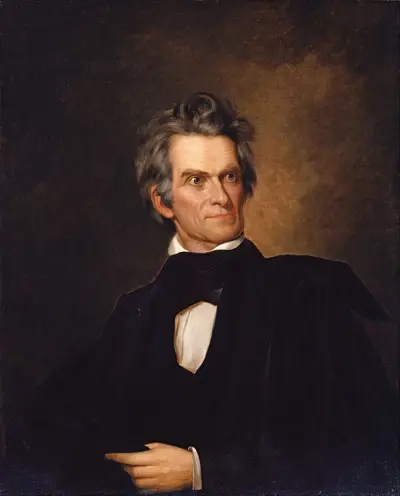
John Caldwell Calhoun was an American politician and political theorist from South Carolina who held many important positions including being the seventh vice president of the United States from 1825 to 1832, while adamantly defending slavery and protecting the interests of the white South when its residents were outnumbered by Northerners. He began his political career as a nationalist, modernizer, and proponent of a strong national government and protective tariffs. In the late 1820s, his views changed radically, and he became a leading proponent of states' rights, limited government, nullification, and opposition to high tariffs. He saw Northern acceptance of those policies as a condition of the South remaining in the Union. His beliefs and warnings heavily influenced the South's secession from the Union in 1860–1861.
