Mary Heaton Vorse Quotes
Here live women, the mothers of many children, who work at night. These women have never rested. They do not know what an unburdened hour is. Five nights a week for ten hours they work for a quarter an hour at midnight.
Mary Heaton Vorse, 1874-1966, Journalist, War Correspondent & Feminist, Newspaper Article Describing the Lawrence, MA, Textile Mill Strike, The Battle of Passaic, New Masses, May, 1926
Sourced by: Eigen's Political and Historical Quotations

This was a description of the famous Lawrence, MA, textile mill strike.
25,000 mill workers went on strike in one of the largest strikes in America at the time.

Muste raised money for the strikers and was soon made the executive secretary of the strike committee for 25,000 strikers. A. J. placed himself at the head of the picket line and was beat to exhaustion by the police and arrested. Several weeks into the strike, the police tried to provoke violence by lining up machine guns and having a labor spy urge the strikers to overcome them.


The coal miners’ strike had been going for 5 months. The major issue was the right to union recognition. The mine owners refused to do that and decided to take the strike. President Theodore Roosevelt mediated a settlement where the miners won more money but no union recognition. The great appeal and significance of this speech is that it stressed the young children who started working in the mines at ages 8 or 9 by working on the “breakers” where they broke up large chunks of coal into smaller chunks. The children never saw daylight and never had a chance for education much less a childhood. At the time, and well into the 20th century the Republican Party was adamantly opposed to any legislation regulating child labor and when two decades later public opinion finally forced Congress to pass Child Labor legislation, the Supreme Court declared it unconstitutional and it took a Constitutional Amendment. See {32240}, {642469}, and {36885}.

Nor did they have much inclination. Organized labor was one of the most sexist institutions in society. Working class men have been major beneficiaries of the “inferiority” of women. At the low end of the hierarchy at work, the working man had only one place where he was at the top of the hierarchy: In his home as the master of his wife and children. And labor organizations evolved from conceptually thinking they were representing the workers of the world in a struggle with the managements to where they were protecting and working for their existing membership against all others and women were outsiders trying to get in and compete with the men. Some men were so macho that the did not want to face the fact that a “lowly woman” could possible do their job That diminished their skill level and self-image.

At the time, it did seem impossible that labor and capital would ever have harmonious relations. But the notion that slavery would solve the problem is as preposterous as anything ever entered into the American political dialogue. But there were many in the South, and some in the North, who actually believed it. Even 150 years later, while labor and capital relations were much better than pre Civil War, they still could not be described as “harmonious” or “friendly”.
Fitzhugh was a Southern iconoclast whose view of Northern labor was much like that of Karl Marx but who was an enthusiastic supporter of slavery.

The left has always been ambivalent about automation. Many object to it on the grounds that it puts men out of work. However, others such as Lafage, argued that automation was the only economic way to reform the working hours and conditions of labor. The problem at the time was that as long as labor was so cheap, there was no motivation for the manufacturer to invest in better machinery. He and many others argued that minimum wages and their increases increase productivity because it would force manufacturers to invest in more productive equipment to reduce their labor costs.

Description of a labor strike in Passaic, NJ in 1926.

At the time, industrialists could not even conceive of the notion of negotiating over wages must less collective bargaining.


Ten cents a day was a very low wage—it was about the equivalent of a meal at a tavern at the time. Workers throughout the country were outraged and give him a derogatory nickname—see Quotation 643585.


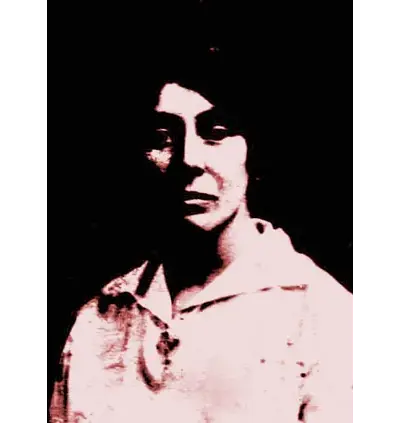
Mary Heaton Vorse O'Brien was an American journalist, labor activist, social critic, and novelist. She was outspoken and active in peace and social justice causes, such as women's suffrage, civil rights, pacifism (such as opposition to World War I), socialism, child labor, infant mortality, labor disputes, and affordable housing.
