Gerhard Schroder Quotes
German history shows us that sometimes dictators can only be stopped by force.
Gerhard Schroder, Chancellor of Germany (Social Democrat), National TV New Year’s Address, December 2002
Sourced by: Eigen's Political and Historical Quotations

Helms was then a young agent of the Office of Strategic Services (OSS) in Berlin.


When the Japanese attacked Pearl Harbor later that year, Germany, fulfilling its treaty with Japan, declared war on America, and we were at war.


Evelyn John St. Loo Strachey
He had been part of a plot to assassinate Adolf Hitler. There were a small group of Anti Nazi Germans during WW II. Carnaris was one. Most were killed.


_0_thumbnail_47x47.jpg)
He was countering the argument of unlimited free speech advocates that fascist hate speech should not be countered by more speech on teh other side. Historically, he observed, that Fascism has only been defeated by force and control.


This quotation is important because there are some who believed that the professional German Soldiers did not respect Hitler and his murderous policies. This quotation shows that at least publicly Donitz had no problem extolling Hitler above all others. After the war Donitz was found guilty of Unrestricted Submarine Warfare and using thousands of slave laborers in his shipyards. He was sentenced to 10 years, one of the lightest sentences if the German War Crimes Trials.


This quotation brought Mises much criticism at the time and has destroyed his moral credibility for the rest of his career. Like many others who supported the wealthy ruling classes, he expressed admiration for Fascism. Worse he claimed that Nazi German and Italian Fascism saved Europe when subsequent events proved that they destroyed Europe along with 30-40 million people killed. However, unlike most of the right wing Fascist enthusiasts of the day, he did—in the last sentence of this quotation which is often omitted by critical quoters—observe that Fascism success would not be permanent or long lived. His lack of moral condemnation of Fascism and Fascists however was clear. Some of his apologists and decuples observe that his philosophy tended to avoid all kinds of moral judgments pro and con about almost everything. It was this lack of a moral / ethical framework that most of his critics point to as a great failing of his. Also, many argue that this is another example of Mises tendency to exaggerate. Mises also took great criticism on what he claimed were “best intentions”; this included virulent racial and religious discrimination, militarism, aggression and expansionism, persecution of the handicapped. Ironically much later, Mises admitted that all of the Nazi evil was clear before it was implemented, {632449}. Some scholars think that Mises who was almost amoral outside the context of economics, began to develop a moral awareness in the reality of the Nazi charnel that much of Europe had become. One problem is that a person like Mises loses much credibility because of his lack of moral sensibilities and moral perception of a way of life and then exaggerates so many of his examples. However, many of his ideas and insights are very important in man’s quest of an economic system that produces substantial increases in standard of living and development and at the same time assure a modicum of subsistence and dignity and a fair opportunity to achieve much more. Mises’s ideas should not be ignored because of the failings of Mises the man.
The allies—mostly under American Pressure—only tried the highest ranking Nazi war criminals. Many wanted to try the rest, but they did not prevail. Lord Russell, the English prosecutor at Nuremburg resigned in protest as he had case files on over 100,000 Nazi war criminals who were never prosecuted. The main object was to use those officials to establish a strong anti-Communist government in post war Germany.


The Prime Minister, Neville Chamberlain, preceded him with the announcement of declaration of war against Germany, but it was left up to the Foreign Minister to explain the implications. This was the first time in history that a nation had used radio to communicate such momentous events to its population.
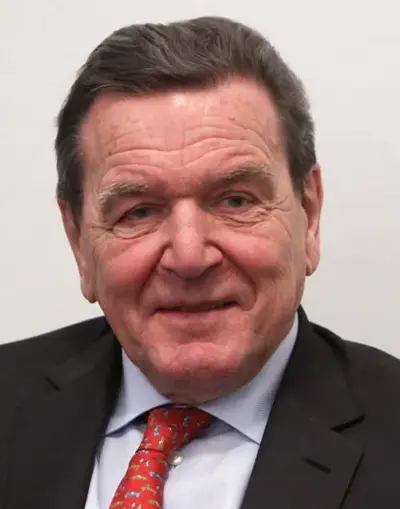
Gerhard Fritz Kurt Schröder is a German politician who served as Chancellor of Germany from 1998 to 2005, during which his most important political initiative was Agenda 2010. As a member of the Social Democratic Party of Germany (SPD), he led a coalition government of the SPD and the Greens. Schröder has been chairman of Russian energy company Rosneft since 2017.
