Samuel Adams Quotes
Freedom of thought and the right to private judgment, in matters of conscience, driven from every corner of the earth, direct their course to this happy country as their last asylum. Let us cherish the noble guests, and shelter them under the wings of universal toleration.
Samuel Adams, 1722-1803, Governor of Massachusetts, Member of the Continental Congress, Speech, Philadelphia, PA, August 1, 1776
Sourced by: Eigen's Political and Historical Quotations


Despite this clear statement, later the Colonial legislature withdrew the franchise from Roman Catholics. See {624149}. Despite this temporary restriction of religious freedom, Rhode Island and Connecticut were far ahead of the other New England colonies in freedom of conscience.


Henry of Navarre


Henry of Navarre. This edict made the Huguenots and other Protestants legal in France whereas only 26 years earlier 50,000 of them had been slaughtered in France by the Catholics. It wasn’t a century before the Catholics reneged. See {617765}.


This was in effect a “Real Estate Promotional Document. Unlike the New England colonies the Carolinas had freedom of and from religion right from the beginning and it was used as an advertising point to get colonists. See {611573} and {611571} for other “features.”


Abdul Rahman, Afghan citizen, had converted from Islam to Christianity 16 years before. Conversion from Islam is a capital crime under Sharia Law which was the law of Afghanistan even after the Taliban had been overthrown. He was jailed and threatened with death. Statements like this and others made directly to the government persuaded the Afghan politicians to go against their mullahs who demanded the death penalty as is proscribed by Islamic Law—Sharia. The judges tried to get Rahman to recant and he would not (see {589518}). So they finally decided that he must be mentally insane and therefore could not be tried, and the problem was solved that way.


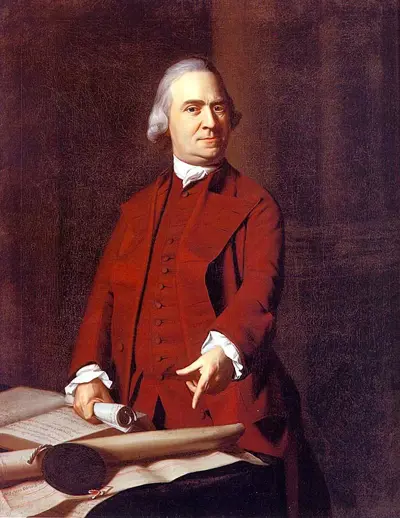
Samuel Adams was an American statesman, political philosopher, and one of the Founding Fathers of the United States. He was a politician in colonial Massachusetts, a leader of the movement that became the American Revolution, and one of the architects of the principles of American republicanism that shaped the political culture of the United States. He was a second cousin to his fellow Founding Father, President John Adams.
