Albert Einstein Quotes
Freedom of teaching and of opinion in book or press is the foundation for the sound and natural development of any people.
Einstein, Albert. Ideas and Opinions. Crown Publishers, 1954, p. 31.


The Scientific Project that developed the Atomic Bomb. Oppenheimer was the great physicist who directed the successful development of the atomic bomb so as to build the weapon before Hitler did in World War II. However, as the technology evolved, he had doubts as to the wisdom of creating even more powerful hydrogen weapons. His viewpoint was hurting the administration’s policy of rapid unlimited nuclear weapons development, and he was the victim of a character assassination whereby his security clearance was withdrawn. The “father” of the atomic bomb was the first American casualty of atomic weapons development.


She was dealing with a serious campus situation where an invited speaker, Chief of Police Kelly of New York City was prevented from giving his p resentation on the controversial “Stop and Frisk” rules by student protesters who opposed the practice. Brown’s tradition of hearing anyone on the campus regardless of point of view had been broken to the distress of most students, faculty and alumni.


In many nations, including the United States on occasion, governments have made laws as to what is valid science and what is not. Tennessee and other Bible-Belt States have and still do on occasion. The latest being Evolution, which even in the beginning of the 21st century, Kansas determined that it was not proven science, when it is as proven as any science has ever gotten.


See related quote.


Ingersoll was considered to be the greatest orator and political thinker of his day, but his overt atheistic views curtailed his elected political career.


Vladimir Lenin. Lenin’s argument seems reasonable, except if there is one party, and all privileges of the society require party membership as was the case in Soviet Russia, then anyone who speaks or writes contrary to party doctrine, can lose almost everything but his life if he is then ejected from the party. So freedom of speech became a stated principle which in Russia was a practical myth. Under Stalin, he didn’t even follow any principle of freedom of speech, and many Russians lost their lives for what they said.

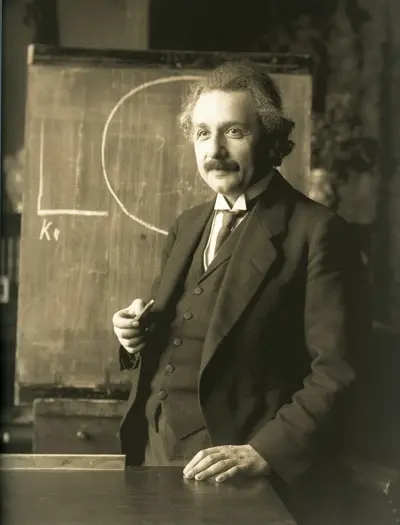
Albert Einstein was a German-born theoretical physicist, widely acknowledged to be one of the greatest physicists of all time. Einstein is known for developing the theory of relativity, but he also made important contributions to the development of the theory of quantum mechanics. Relativity and quantum mechanics are together the two pillars of modern physics. His mass–energy equivalence formula E = mc2, which arises from relativity theory, has been dubbed "the world's most famous equation". His work is also known for its influence on the philosophy of science. He received the 1921 Nobel Prize in Physics "for his services to theoretical physics, and especially for his discovery of the law of the photoelectric effect", a pivotal step in the development of quantum theory. His intellectual achievements and originality resulted in "Einstein" becoming synonymous with "genius".
