Vladimir Lenin Quotes
Everyone is free to write and say whatever he likes, without any restrictions. But every voluntary association (including the party) is also free to expel members who use the name of the party to advocate anti-party views. Freedom of speech and the press must be complete. But then freedom of association must be complete too. I am bound to accord you, in the name of free speech, the full right to shout, lie and write to your heart’s content. But you are bound to grant me, in the name of freedom of association, the right to enter into, or withdraw from, association with people advocating this or that view. The party is a voluntary association, which would inevitably break up, first ideologically and then physically, if it did not cleanse itself of people advocating anti-party views.
Vladimir Lenin. Lenin’s argument seems reasonable, except if there is one party, and all privileges of the society require party membership as was the case in Soviet Russia, then anyone who speaks or writes contrary to party doctrine, can lose almost everything but his life if he is then ejected from the party. So freedom of speech became a stated principle which in Russia was a practical myth. Under Stalin, he didn’t even follow any principle of freedom of speech, and many Russians lost their lives for what they said.
Nikolai Lenin, 1870-1924, Russian Communist Premier "Party Organization and Party Literature”, November 13, 1905
Sourced by: Eigen's Political and Historical Quotations


Arguing against explicit guarantees of press freedom in the Constitution Hamilton felt that the freedom could be maintained by public opinion and the good will of government:

Twenty year prison sentences were imposed for publishing left wing Bolshevik literature. The case was appealed to the Supreme Court:


The evils of the time were even worse than in modern times. Most newspapers, journals, and periodicals were in 1835 actually owned and operated by political parties or people totally identified with political parties. In modern times, there are publications and blogs which are controlled by political forces, but most are not.

In September of 2005 a Rose’s newspaper published some political cartoons showing the hypocrisy of some Muslims who use Islam to justify murder of innocents and terrorism. Months later, in January of 2006 many in the Middle East protested vehemently and Muslim riots broke out because the Prophet Muhammad's visage was depicted against Islamic tradition. Many Muslim nations started a boycott against Denmark. Many Muslim leaders claimed that insulting religion was an “abuse” of freedom of speech including those from nations which regularly publish material that is virulent against Christians and Jews. Apologies were demanded from Rose.


The Masses was a left wing publication which the then Post Office officials decided were “dangerous”. Later, the Supreme Court would hold that there could not be this degree of political censorship by Post Office officials.


There was much democratic pressure from the Russian workers in the decade after the Russian Revolution. This was brutally suppressed by Stalin Immediately after the Russian Revolution, the provisional government appointed him as Ambassador to the United States. However, the provisional government was supplanted when the Bolsheviks took over. Not enamored of Communism, he stayed in the United States with many other Russian refugees.


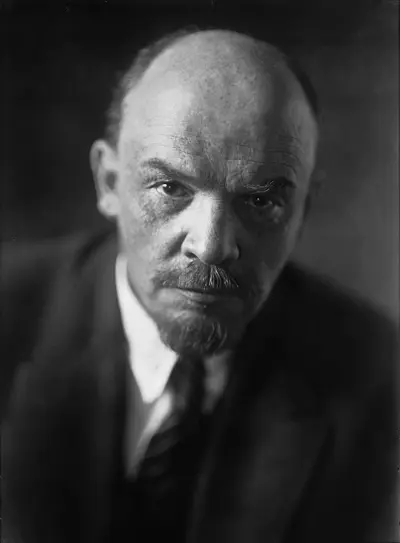
Vladimir Ilyich Ulyanov, better known by his alias Lenin, was a Russian revolutionary, politician, and political theorist. He served as the first and founding head of government of Soviet Russia from 1917 to 1924 and of the Soviet Union from 1922 to 1924. Under his administration, Russia, and later the Soviet Union, became a one-party socialist state governed by the Soviet Communist Party. A Marxist, he developed a variant of this communist ideology known as Leninism.
