Noam Chomsky Quotes
Orwell says straight, look, in England what comes out in a free country is not very different from this totalitarian monster that I'm describing in the book. It's more or less the same. How come in a free country? He has two sentences, which are pretty accurate. One, he says, the press is owned by wealthy men who have every reason not to want certain ideas to be expressed. And second - and I think this is much more important - a good education instills in you the intuitive understanding that there are certain things it just wouldn't do to say.
Chomsky, Noam. Media Control: The Spectacular Achievements of Propaganda. Seven Stories Press, 2002.


Vladimir Lenin


The Masses was a left wing publication which the then Post Office officials decided were “dangerous”. Later, the Supreme Court would hold that there could not be this degree of political censorship by Post Office officials.

Samuel Langhorne Clemens, 1835-1910


In September of 2005 a Rose’s newspaper published some political cartoons showing the hypocrisy of some Muslims who use Islam to justify murder of innocents and terrorism. Months later, in January of 2006 many in the Middle East protested vehemently and Muslim riots broke out because the Prophet Muhammad's visage was depicted against Islamic tradition. Many Muslim nations started a boycott against Denmark. Many Muslim leaders claimed that insulting religion was an “abuse” of freedom of speech including those from nations which regularly publish material that is virulent against Christians and Jews. Apologies were demanded from Rose.


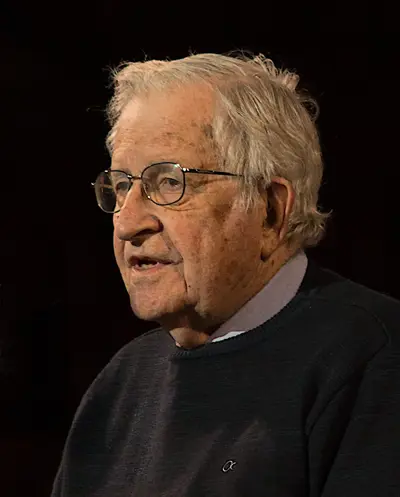
Avram Noam Chomsky is an American linguist, philosopher, cognitive scientist, historian, social critic, and political activist. Sometimes called "the father of modern linguistics", Chomsky is also a major figure in analytic philosophy and one of the founders of the field of cognitive science. He is Laureate Professor of Linguistics at the University of Arizona and Institute Professor Emeritus at the Massachusetts Institute of Technology (MIT), and is the author of more than 150 books on topics such as linguistics, war, politics, and mass media. Ideologically, he aligns with anarcho-syndicalism and libertarian socialism.
