Jared Diamond Quotes
Forced to choose between limiting population or trying to increase food production, we chose the latter and ended up with starvation, warfare, and tyranny.
Diamond, Jared. "The Worst Mistake in the History of the Human Race." Discover, May 1987.


Johnson insisted that he would not provide food to ease India’s famine until the nation adopted a family planning program including education about all methods of birth control and making available devices such as condoms to India’s poor

Often referred to as “Father of the Green Revolution” for his contributions to food growing throughout the world

From a technical and production point of view, there is no practical limit to population size that is imposed by food production. We can produce sufficient food for the world even if population increases dramatically. None the less, even today we have some starvation and much malnutrition problems. These however are political, economic and tend to be distributional. We can produce the food. Morris does NOT advocate large population growth. Although food need not be a problem with an expanding population, job availability, medical care, energy, land, natural resources, ethnic hatred, migration, violence, and other problems are produced by population growth.


This was a tragic prediction for some as it was used as a theoretical reason for little intervention in the Irish famine a few decades later. The then population density is exceeded by many countries today.


The Depression had 25% unemployment and many people lacked even food to eat. Meanwhile, there was a huge amount of unused, idle land in California.


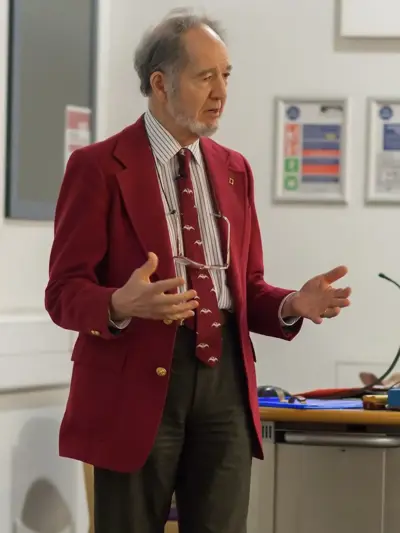
Jared Mason Diamond is an American geographer, historian, anthropologist, ornithologist, and author best known for his popular science books The Third Chimpanzee (1991); Guns, Germs, and Steel (1997, awarded a Pulitzer Prize); Collapse (2005), The World Until Yesterday (2012), and Upheaval (2019). Originally trained in biochemistry and physiology, Diamond is known for drawing from a variety of fields, including anthropology, ecology, geography, and evolutionary biology. He is a professor of geography at UCLA.
