Alex Gibney Quotes
For years, the Bush Administration eviscerated all the military and legal structures that were designed to separate the innocent from the guilty in the 'Global War on Terror.'
Gibney, Alex. "Taxi to the Dark Side." HuffPost, BuzzFeed, 28 Jan. 2008.


The problem that was facing the nation in the early 21st century was when we captured a terrorist, was he a combatant or was he accused by a personal enemy, and had he been tortured to say he was a terrorist. The issue grew more complicated when terrorist suspects were brought to American territory at Guantanamo Bay, and the Courts have always held that a foreigner on American soil had a right to have access to the Federal Courts just as Citizens do. Complicating the situation more was the fact that a few American citizens had joined the terrorists and were they entitled to a civilian trial as all other Americans were.

There has always been some confusion in the case of the Wars in Afghanistan and Iraq. The Geneva and Hague conventions are very clear when prisoners are official members of an state’s armed force with uniforms, insignia and ranks. It is also clear with respect to civilians. But the combatants of the insurgent and terrorist forces fall in between, and international law is less clear. The George W. Bush administration at first took the position that the captured combatants were not captured soldiers and were therefore not entitled to the treatment due that status. But the military regulations made no distinction as to how prisoners in combat should be treated. It is a very gray area, except that in either case, torture is illegal under U. S. and under International law.

Turkey, under the control of the triumvirate of the 3 Young Turks had massacred almost all of the Armenian population in the area claimed by Turkey. At the end of WWI, there were many demands that those who ordered the policy of a Turkish genocide and those who carried it out by brought to justice—tried and punished. The Sultan had done little if anything to stop the slaughters although he was very weak, Turkey under the Young Turks had also picked the wrong side and allied with the Germans. The Sultan and his Grand Vizier were trying to pick up the pieces and maintain the Ottoman Empire as best they could despite they the fact that they lost control of much of their vast territory. At the Paris Peace Conference, the Grand Vizier virtually admitted the crimes and committed the Turkish government to determining the guilty and bringing them to justice. He actually had 50 of the worst offenders arrested (See {620595}.). However, there were a few tried and one governor of a province was hanged and a few others received short jail sentences. Talaat, the worst of The Young Turks regarding the genocide, escaped to Germany. But he was tracked by a surviving Armenian who assassinated Talaat. The assassin was acquitted by a sympathetic German court which ruled that the extermination of the assassin’s family had been so traumatic that temporary insanity relieved the assassin of criminal responsibility.


The President and Vice President wanted places to interrogate suspected terrorists where they did not have to obey American law, where the press could be kept away from the prisoners, and there would be no way that a prisoner could get the assistance of attorneys and American Judges could not have any jurisdiction. A number of the prisoners had been picked up by mistake, or were accused by people who had scores to settle, and if the CIA had made a mistake, the public could not find out. Further, they wanted to torture certain prisoners and wanted places where they could use their “enhanced interrogation”—see {637536}--without the public finding out.


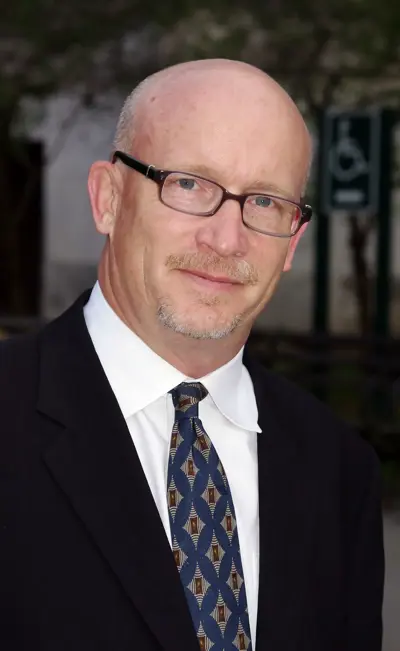
Philip Alexander Gibney is an American documentary film director and producer. In 2010, Esquire magazine said Gibney "is becoming the most important documentarian of our time".
