Thomas Babington Macaulay Quotes
For political and intellectual freedom and for all the blessings that political and intellectual freedom have brought in their train, she [England] is chiefly indebted to the great rebellion of the laity against the priesthood.
1st Baron Macaulay
Thomas Babington Macaulay, 1800-1859, British Historian & Secretary of War (Liberal), Member of Parliament, History of England, I, 1848
Sourced by: Eigen's Political and Historical Quotations


Martin Luther not only reformed Christianity but was a catalyst for many religious Christian alternatives thereby ending monolithic worldwide Christian religious doctrine and control. He argues that Islam must have a similar reform process.


“Coligny” was Gaspard de Coligny, 1519–1572, the Huguenot fonder. “William the Silent” was William of Orange the main leader of the Dutch revolt against the Spanish, and Cromwell was the leader of the English revolution. All three were major figures in advancing the concept of individual freedom of the ordinary man and all three were profoundly influences by John Calvin.


Toynbee was very active in attempting to reform the Church of England.

It is an error to say that. It is an error to say that He was the last Pope to hold temporal power. Years later, the Vatican rejected this view and adopted the modern concept of freedom of conscience. See {612714}.

Followers of the religious views of January Hus, 1369-1415 Hus was excommunicated and executed for his views that parts of the church were corrupt.

English visitors to the English Colonies in America Before independence America had developed its own culture which proved very attractive to Englishmen who spend time in the colonies.

Ingersoll was considered to be the greatest orator and political thinker of his day, but his overt atheistic views curtailed his elected political career.


Carroll was writing to Troy during the time of the question of Catholic emancipation in England. Here he is clearly alluding to the British form of government. Carroll never missed the opportunity to champion religious freedom as manifested in the U.S. Constitution. For an earlier example of his praise for religious freedom, see {596933}.

This famous quotation has been attributed to Voltaire, 1694-1778, and French Philosopher, Denis Diderot, 1713-1784. Most quotation collections erroneously attribute it to Diderot in the version “Men will never be free until the last king is strangled with the entrails of the last priest.” Both Voltaire and Diderot used the quotation as did many others opposed to monarchy and the then repressive church hierarchies. But the origin of the famous phrase was with Meslier. When the priest died, three handwritten manuscripts were found written and signed by him in which he attacked religion in general and the church and the Bible in particular. His Testament was read by Voltaire and Denis Diderot among others and he was very influential in their development as opponents of organized religion.

1st Viscount Bolingbroke. This is the argument that was and still is given by most theocracies and nations opposed to pluralism. It was also a quotation which with the American founders were familiar and were targeting this view when they demanded the 1st Amendment.

Hume is one of the first to observe that if a society would be religiously pluralistic, the ruler and government had best separate itself from all of the religions. He uses the phrase “preserve a very philosophical indifference.” The Founding Fathers were familiar with Hume’s work and of his treatises were available to them in a Philadelphia library during the Constitutional Convention in 1787.

The treaty, which was also ratified by the Senate, was actually drafted by Joel Barlow, the U. S. Consul in Tripoli. It was the first official statement of the United States on its religious basis or lack thereof.

Note the absolutism of the word unbounded.
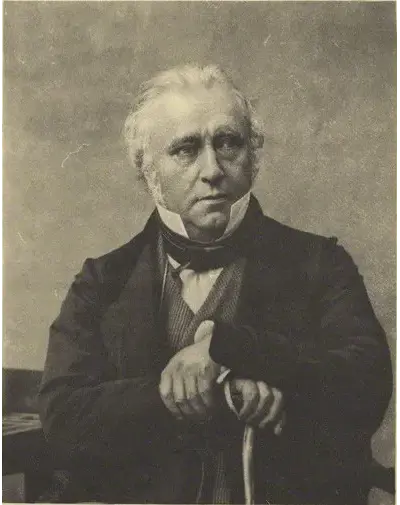
Thomas Babington Macaulay, 1st Baron Macaulay, FRS FRSE PC was a British historian and Whig politician. He wrote extensively as an essayist, on contemporary and historical sociopolitical subjects, and as a reviewer. His The History of England was a seminal and paradigmatic example of Whig historiography, and its literary style has remained an object of praise since its publication, including subsequent to the widespread condemnation of its historical contentions which became popular in the 20th century.
