Wangari Maathai Quotes
For example, they have land. The government of Qatar wants to lease the Tana River delta, which is in Kenya, from the Kenyan government, so that they can produce food there. People in Kenya need food. We have people who have studied agriculture. Why is it that if we really need food, we cannot go into the delta and develop our own food?
Maathai, Wangari. The Challenge for Africa. Pantheon Books, 2009.


The Depression had 25% unemployment and many people lacked even food to eat. Meanwhile, there was a huge amount of unused, idle land in California.


From a technical and production point of view, there is no practical limit to population size that is imposed by food production. We can produce sufficient food for the world even if population increases dramatically. None the less, even today we have some starvation and much malnutrition problems. These however are political, economic and tend to be distributional. We can produce the food. Morris does NOT advocate large population growth. Although food need not be a problem with an expanding population, job availability, medical care, energy, land, natural resources, ethnic hatred, migration, violence, and other problems are produced by population growth.


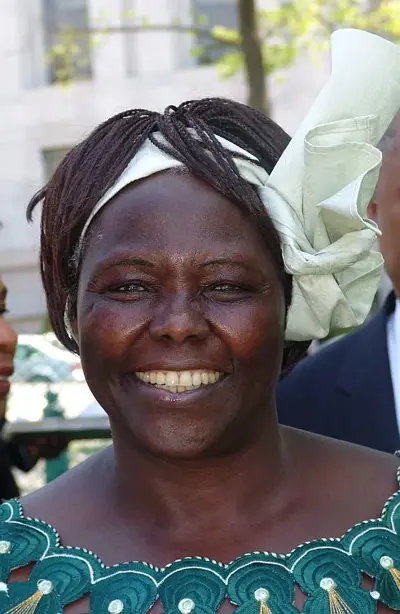
Wangarĩ Muta Maathai was a Kenyan social, environmental, and political activist and the first African woman to win the Nobel Peace Prize. As a beneficiary of the Kennedy Airlift she studied in the United States, earning a Bachelor's Degree from Mount St. Scholastica and a Master's Degree from the University of Pittsburgh. She went on to become the first woman in East and Central Africa to become a Doctor of Philosophy, receiving her Ph.D. from the University of Nairobi in Kenya.
