Thomas Sowell Quotes
Evidence is fact that discriminates between one theory and another. Facts do not speak for themselves. They speak for or against competing theories. Theories can be devastated by facts but they can never be proven correct by facts. What empirical verification can do is to reveal which of the competing theories currently being considered is more consistent with that which is known factually. Some other theory may come along tomorrow that is still more consistent with the facts, or explains those facts with fewer, clearer, or more manageable assumptions.
Thomas Sowell, The Vision of the Anointed: Self-Congratulation as a Basis for Social Policy, Basic Books (1996)


He was addressing the misunderstanding that many laypeople and most anti-evolutionists have that if Evolution is only a theory why put so much stock in it. The layman often uses the word “theory” in opposition to “fact.” But to the scientist theories are of different types—those that are as of yet speculation and those for which a strong body of evidence exists. Evolution, like Relativity, has a huge amount of evidence supporting it. Yet in time every good scientist knows that all these proven theories will be modified with new knowledge. Relativity has been demonstrated as having errors initially by Einstein himself. The essence of these things are true although elements change. The early law of gravity is the best example. We know that it is wrong in many, circumstances—in space for example. But it, none the less, is fundamental to much analysis and with our much more sophisticated understanding of it we still talk of the “Law” of gravity even though we realize that it is not quite correct in all circumstances.


A null hypothesis is a statistical scientific term that a researcher assumes and uses to compare other things to. If there are no significant, found differences, the null hypothesis is not rejected. If significant differences are found, then the null hypothesis (yesterday's truth) is then rejected. In science, no one has been right for 400 years since Aristotle. Truth is never eternal. It is continuously subjected to testing and conformation and history has shown that with new instruments, new techniques and new other findings to work from, sooner or later what we think is true today turns out to not quite be so. Often it is not completely wrong, but the old "truth" turns out to be not so in all cases or situations. For example, the mechanics of Isaac Newton was assumed for a few centuries to be true. Then along came Albert Einstein and he showed that Newton was right except when objects were traveling at very high speeds when Relativity explained them. And in less than one century, we realized that Einstein's Relativity explained everything except very small particles which are better explained by Quantum Mechanics. This process of will almost certainly continue.
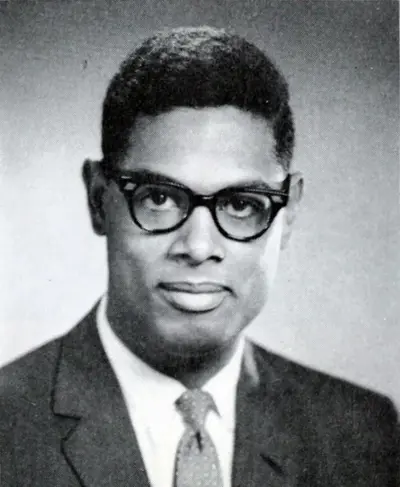
Thomas Sowell is an American economist, social theorist, and senior fellow at Stanford University's Hoover Institution.
