NATHANIEL COMFORT
(Nathaniel Charles Comfort)
A null hypothesis is a statistical scientific term that a researcher assumes and uses to compare other things to. If there are no significant, found differences, the null hypothesis is not rejected. If significant differences are found, then the null hypothesis (yesterday's truth) is then rejected. In science, no one has been right for 400 years since Aristotle. Truth is never eternal. It is continuously subjected to testing and conformation and history has shown that with new instruments, new techniques and new other findings to work from, sooner or later what we think is true today turns out to not quite be so. Often it is not completely wrong, but the old "truth" turns out to be not so in all cases or situations. For example, the mechanics of Isaac Newton was assumed for a few centuries to be true. Then along came Albert Einstein and he showed that Newton was right except when objects were traveling at very high speeds when Relativity explained them. And in less than one century, we realized that Einstein's Relativity explained everything except very small particles which are better explained by Quantum Mechanics. This process of will almost certainly continue.
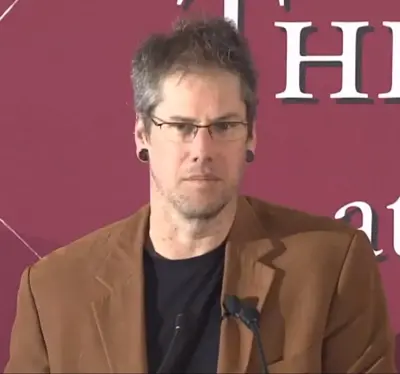
Nathaniel Charles Comfort is an American historian specializing in the history of biology. He is an associate professor in the Institute of the History of Medicine at Johns Hopkins University. In 2015, he was appointed the third Baruch S. Blumberg NASA/Library of Congress Chair in Astrobiology at the Library of Congress John W. Kluge Center. He also serves on the advisory council of METI (Messaging Extraterrestrial Intelligence).
