Henry Williamson Quotes
Every country in every war fights for freedom.
Williamson, Henry. The Wet Flanders Plain. Beaumont Press, 1929.

See Noah Webster and Timothy Pickering for similar positions. The War of 1812 was very unpopular with the New England states. They had the most developed trade with England and were economically injured by the curtailment of that trade. The citizens of Essex wanted to give the State Legislature the most possible moral and political power to negotiate an end to the war.


The Second World War placed the Mormons in a dilemma whereby they had adherents on both sides of the conflict as was the case with the Catholic Church. Positions the church took on the behavior of the belligerents could cost the church its position and influence especially in Germany. The Catholic Church was more careful of offending the Nazis and did not speak out much against the worst of the atrocities. The Mormons in contrast saw the Nazis as the agents of Satan determined to exterminate the Jews so that they could not return to Israel which under Mormon (and some Protestant) prophesy was necessary to occur before the Second Coming.


Thompson’s son was serving with U. S. forces in the Iraq War at the time.


South America, invaded and colonized by Spain was a brutal combination of slavery and repression. Even the European colonists suffered under the terrible combination of exploitation, militarism and religious dictatorship. Independence from Spain was equally bloody as unlike in North America where the fight was against British rule, in South America the black slaves, the indigenous Indians and the white colonists all had scores to settle with the Spanish rulers. And the Spanish in turn realized that and brutally repressed all rebellion attempts. Atrocities were common, and committed by almost all, including even idealists like Bolivar.


The motto was worn on their uniforms which unlike the blue of the rest of the American army was white as can be seen in the famous paining by muralist David R. Wagner. Rhode Island offered freedom to all slaves who would enlist. It not only included Negroes but Indian slaves as well. See {613949} and {614120} for details. The motto itself is interesting in that there was little concept of a country then as most Americans identified themselves as Virginians, New Yorkers or Rhode Islanders. There was no Constitution—only a confederation of States. But the former slaves joining the regiment had never voluntarily associated themselves with Rhode Island, and the first free decision they made was to join the regiment and have a new country.


It is not clear whether their manifesto was written by D’annunzio himself or followers in Fiume the Dictatorial mini-state that he ruled, He was a precursor to the Fascists of Europe and this is the origin of the Fascist glorification of war. Hitler and Mussolini also picked up the dagger as a symbol (see Quotation 643744), the black colored uniforms and the stiff-armed salute from D’annunzio.


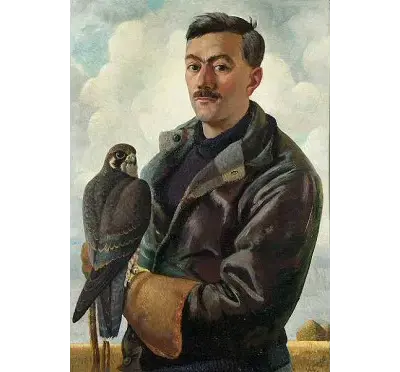
Henry William Williamson was an English author who wrote novels concerned with wildlife, English social history and Ruralism. He was awarded the Hawthornden Prize for literature in 1928 for his book Tarka the Otter.
