Canada Quotes
Every citizen of Canada has the right to enter, remain in, and leave Canada.
Canadian Charter Of Rights And Freedoms, Article 6, Constitution Act, 1982
Sourced by: Eigen's Political and Historical Quotations

This is the clause that many Palestinians point to as supporting their position that even thought most Arab refugees left Israel voluntarily, they had a right of return.

The right to form a new state in vacant and purchased land was quite remarkable. This right never made it into the U. S. Constitution.


This was the first restriction on immigration and citizenship, and was at the time uniquely directed against Chinese.


Various elements of the 14th amendment were being debated. Language referred to “citizens” but many of the abolitionists and reconstructionists were concerned that the slavery forces in the Southern states would not provide protections to the Negro and the grounds that the were not citizens. As long as the states could define who was and was not a citizen, any of the equal protection clauses of the proposed 14TH Amendment could be evaded. Senator Howard then proposed this language which was accepted and became part of the Amendment. In modern times this particular clause was more relevant to the debate about immigration than to civil rights but originally the clause was included to make sure that Blacks would be citizens.


Ironically, where national quotas have been used in American immigration policy, it has rarely been used to keep nationals of countries with which we were having difficulty, out. In almost all cases, the national quotas have been used to discriminate against racial and religious minorities in America. Asians, Blacks, Hispanics, Catholics, Mormons and Jews have been the most frequent groups targeted. Even when we were in the midst of the Cold War, American policy was to accept immigrants from the Soviet Union and Cuba enthusiastically.


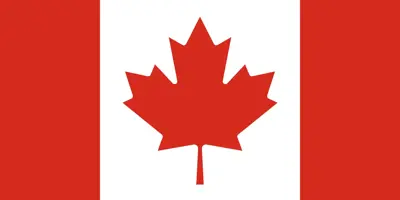
Canada is a country in the northern half of North America. Its ten provinces and three territories extend from the Atlantic to the Pacific and northward into the Arctic Ocean, covering 9.98 million square kilometres (3.85 million square miles), making it the world's second-largest country by total area and the fourth-largest country by land area. Canada's border with the United States is the world's longest land border. The majority of the country has a cold or severely cold winter climate, but southerly areas are warm in summer. Canada is sparsely populated, the majority of its land territory being dominated by forest and tundra and the Rocky Mountains. About four-fifths of the country's population of 36 million people is urbanized and live near the southern border. Its capital is Ottawa, its largest metropolis is Toronto; other major urban areas include Montreal, Vancouver, Calgary, Edmonton, Quebec City, Winnipeg and Hamilton.
