Anson Burlingame Quotes
The United States of America and the Empress of China cordially recognize the inherent and inalienable right of man to change his allegiance and also the mutual advantage of the free migration and emigration of their citizens from the one country to the other.
Cixi, 1835–1908, Empress Dowager of China, Anson Burlingame, 1820–1870, U. S. Congressman (Know Nothing & Republican, MA), U, S, Minister to China, Chinese Ambassador Extraordinary to Europe and America -- the first Chinese ambassador to the West Article V, Treaty of 1868
Sourced by: Eigen's Political and Historical Quotations


The requirement for citizenship required the applicant to petition—make a true declaration. The issues of that day that Americans were concerned about were anarchy, polygamy, and loyalty to other nations. A century later, terrorism has taken the place of anarchy as the major concern. Polygamy is no longer an issue, and America allowed citizens to have dual citizenships with many other counties.


Various elements of the 14th amendment were being debated. Language referred to “citizens” but many of the abolitionists and reconstructionists were concerned that the slavery forces in the Southern states would not provide protections to the Negro and the grounds that the were not citizens. As long as the states could define who was and was not a citizen, any of the equal protection clauses of the proposed 14TH Amendment could be evaded. Senator Howard then proposed this language which was accepted and became part of the Amendment. In modern times this particular clause was more relevant to the debate about immigration than to civil rights but originally the clause was included to make sure that Blacks would be citizens.


The minister had refused to be pressured by the George W. Bush Administration to sign an agreement with the US agreeing never to turn over an American or a foreign national working for America to the International Criminal Court (ICC). Even if a Peruvian or other non-American were working for an American Agency as an informant, agent, or other role, the country could not respect the treaty obligations that they had already made with regard to the ICC. Peru was “punished” losing $4 million aid. Nations were so “punished” while the State Department was spending huge sums to remedy negative opinion that so many nations had developed for the US during the George W. Bush administration. See {585493},65901 & {585496}, for more quotations on this. The US did not join the ICC Treaty as in some countries political considerations and different ethical values have labeled some American legitimate behavior as criminal and have attempted to hold individuals responsible for carrying out lawful orders. So many foreigners could understand the United States not wanting to deny Americans and others in the United States the protection of the United States Constitution, there was ire at the US pressuring others to boycott the ICC and break their existing treaties.

The right to form a new state in vacant and purchased land was quite remarkable. This right never made it into the U. S. Constitution.

This was the first restriction on immigration and citizenship, and was at the time uniquely directed against Chinese.


All foreign immigrants were welcome provided they would “renounce” their allegiance to an foreign ruler or religious leader. The latter was really directed at Roman Catholics. European history had many instances where the Pope and the Vatican plotted with different forces to produce armed rebellion in various states to maintain a Catholic Establishment. England and Ireland were both the subjects of Papal revolutionary initiatives and the Americans were well aware of it. Popes and cardinals had ordered good Catholics to take various political positions including what was treason and sedition. The fear of political control of American Catholics motivated the inclusion of Ecclesiastical renouncement to become a naturalized citizen. Also note that it was the States who controlled citizenship at that time and not the Federal Government.


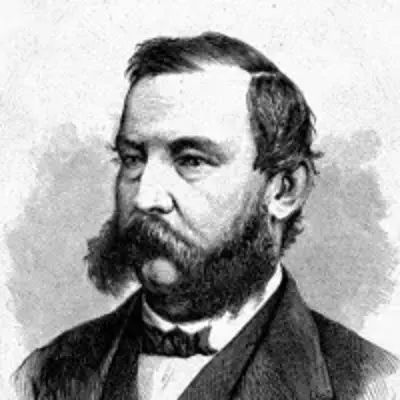
Anson Burlingame was an American lawyer, Republican/American Party legislator, diplomat, and abolitionist. As diplomat, he served as the U.S. minister to China (1862–1867) and then as China's envoy to the U.S., which resulted in the 1868 landmark Burlingame Treaty.
