Simon Bolivar Quotes
Europe itself, by policy, should have prepared and carried out plans for South American independence; not only because it is necessary for the proper balance of the world, but because it is a legitimate and safe means for obtaining commercial bases on this side of the ocean.
Simon Bolivar 1783-1830, South American Colonial Liberator, President of Venezuela and Columbia, Letter from Jamaica to Maxwell Hyslop, 1815
Sourced by: Eigen's Political and Historical Quotations


After the economic & power collapse of the Soviet Union, the United States was the only remaining superpower. Givern Russia's diminshed capability and many Americans still carrying resentments about the Cold War, America's foreign policy and diplomacy did not treat Russia as if they were a very important power in the world. Puten greatly resented the fact that Russia was no longer considered or treated like a world power, Russia had a nuclear arsenal and a total delivery system what was in the same destructive potential class as the United States. There were many Russiabs who had similar resentments and Putin sert out to adopt policieis and practices that would force the United States and the other nations to consider them with more dignity, respect and consdideration. This was a typical statement of the period when he was "stoking the fires of Russian resentment.

The Peninsula was the term used to describe Spain. At the time there were various wars and conquests of Spain and Portugal and by referring to the Peninsula everyone knew what was referred to independent of the latest battle or revolution.


The term “America” was used by him and others to refer to South and Central America—not the United States.


The commander complained of the brutal behavior of Bolivar and the revolutionaries, but the atrocities committed by the Spanish forces were even worse and both sides fought with techniques that had no civilized restraints.

Samuel Langhorne Clemens, 1835-1910

The issue of unilateral or multilateral foreign policy efforts faced America after WWII.


It was interesting that Reagan as a political presidential Republican candidate would criticize the foreign policy of the previous Republican Party. However the policy was created by President Richard Nixon who had but a small reservoir of support after Watergate.


This quotation illustrates White’s extreme naivety about Stalinist Russia. At the time the Soviet Union had been backing communist insurgencies blatantly in China, Greece, and Korea for example. Most historians agree that White passed classified information to the Russians. He was accused of being a Communist, but there was never any evidence of that. Some people believe that he was a spy for the Russians and committed espionage, but others disagree observing that White was very much his own man and felt that much information that was classified never should have been. White substituted his own judgment, it is believed, about what could be given to the Russians. He was an admirer of what Russian socialism had accomplished economically, educationally and medically since the 1917 revolution deposing the Czar. Russia had been a valuable military ally, which had taken the brunt of both military and civilian casualties in WWII. White’s economics were certainly not Marxist but very much Keynesian. He was subpoenaed by the House Un-American Activities Committee where he was accused of being a Communist which he denied (see {634907}). He died of a heart attack 3 days later.

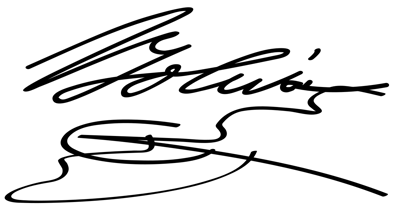
Simón José Antonio de la Santísima Trinidad Bolívar y Ponte Palacios y Blanco (Spanish: [siˈmom boˈliβaɾ] (listen), English: /ˈbɒlɪvər, -vɑːr/ BOL-iv-ər, -ar also US: /ˈboʊlɪvɑːr/ BOH-liv-ar), also colloquially as El Libertador, was a Venezuelan military and political leader who led what are currently the countries of Venezuela, Bolivia, Colombia, Ecuador, Peru, and Panama to independence from the Spanish Empire.
