James Bovard Quotes
Entire generations of Americans have come of age since the ancient time when the president's power was constrained by a duty of candor to the American people.
Bovard, James. Attention Deficit Democracy. Palgrave Macmillan, 2006.


In the 1952 steel seizure case the justice department took the position that the President's actions were not reviewable by the courts. The judge ruled against Baldridge and the government.


Alberto Gonzalez, White House Counsel and later Attorney General who was forced to resign and David S. Addington, Counsel to the Vice President, had come up with a novel view of the powers of the presidency. They argued that since the President is the Commander in Chief, in a war situation or intelligence gathering thereto, has the Constitutional responsibility for that function, he need not obey any laws of Congress as in the conduct of the war Congress would be impinging on the Constitutional separation of powers which itself was prohibited by the Constitution. The argument did not find any significant legal support but for a while the George W. Bush White House behaved as if this were the law, despite the fact that even in the American Revolution and the War of 1812 Congress passed laws regulating the conduct of the armed forces as is provided for in other parts of the Constitution. Yet even Goldsmith would allow the President some powers that many think are unconstitutional and/or belong to Congress. See {32436}.
His role was the equivalent of the Mayor of Washington DC. Even though the Congress had generally been the most powerful branch of the government, public opinion on this was beginning to shift at the turn of the 20th century.


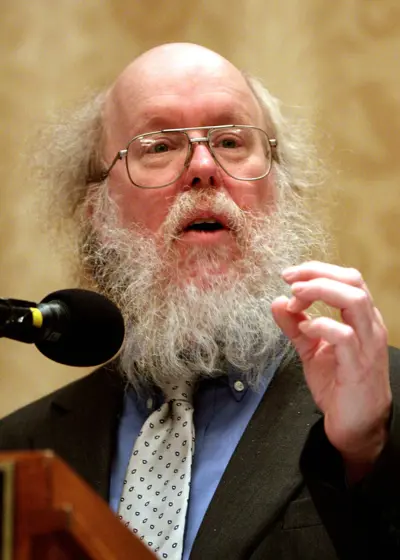
James Bovard (/bəˈvɑːrd/; born 1956) is an American libertarian author and lecturer whose political commentary targets examples of waste, failures, corruption, cronyism and abuses of power in government. He is a USA Today columnist and is a frequent contributor to The Hill. He is the author of Attention Deficit Democracy and nine other books. He has written for the New York Times, Wall Street Journal, Washington Post, New Republic, Reader's Digest, The American Conservative, and many other publications. His books have been translated into Spanish, Arabic, Japanese, and Korean.
