Henry C. Simons Quotes
Eliminate all forms of monopolistic market power, to include the breakup of large oligopolistic corporations and application of anti-trust laws to labor unions. A Federal incorporation law could be used to limit corporation size and where technology required giant firms for reasons of low cost production the Federal government should own and operate them.
Henry C. Simons, 1899–1946, Economist, A Positive Program for Laissez Faire, 1934
Sourced by: Eigen's Political and Historical Quotations


Here, an officer of a large corporation (Pittsburgh Plate Glass) makes the classic argument of large corporations about the anti-trust laws which prevent them from using their economic power to crush competition. The claim that the large corporations are at a disadvantage and handicapped in competing with small companies is easily refuted by the bankruptcy rate of small businesses which is large, and that of large corporations which is very small, and that of major monopolies which is virtually zero.


Ironically the far right wing Fascists and the far left wing Communists agreed on this point: nationalization.


The National City Company was formed expressly as an attempt to dominate and monopolize the United States economy. It was a holding company that included Standard Oil, National City Bank, 16 other banks, and the Union Pacific and Southern Pacific railroads among others, all controlled by the same 3 men--William Rockefeller, .James Stillman, and Frank Vanderlip.


One irony that some critics of Murdoch’s enterprises make is that despite his personal views about monopoly his businesses try to attain and maintain monopoly status whenever it can.


One important observation of this quotation is the pejorative language Mises used to describe “Union Bosses” as opposed to “Union Leaders.” There were indeed a few Union “Bosses” but most unions had popularly elected leaders. It is similar to the left wing critic who refers to Corporate Executives as “Greedy Monopolists.” A few are but most are not. Historically, in the last half of the 20th century and the beginning of the 21st, the conservatives tended to be much better at pejorative language and used it more frequently and uniformly than the liberals who tended to be better in the last part of the 19th century and the first half of the 20th century.

While this statement seems totally absurd to us today, at the time most politicians and judges believed it. Only the left wingers and the populists opposed the doctrine as well as most business owners who knew the truth but of course most preferred the have their own monopoly. One of the reasons the large American corporations did not want Jewish and Chinese immigrants is that those cultures supported highly competitive businesses and might give consumers a better deal or worse, their culture would argue for less monopoly and more competition. For more than half a century AT&T was given a monopoly over almost all telephone service in the United States. Finally the Federal Courts saw through the company propaganda, and ordered AT&T broken up. The “Baby Bells” have persuaded most state legislatures and regulatory bodies of this same argument, and almost every community of the United States has a monopoly on local wired local telephone service. The same is true about water and electricity and a great deal of American transportation. Every major company strives for as much of a monopolistic position the government will allow; some are overt like the electrical companies. Others are more subtle and use copyright and patents to be sure that there is no price or service competition. Fortunately, the high tech industry is to technologically competitive that prices have been have been going down constantly not like telephone and Internet connectivity, entertainment, education, and professional services.

She had done a monumental exposé of the Standard Oil Company illegal and immoral activities. The public was so aroused that many reforms were instituted and the Standard Oil Company Trust was broken up into many smaller companies. Tarbell was then, in the words of S. S. McClure, “the most famous woman in America.”

She was then the European Commissioner for Competition


See {641989} & {641989} for more on the Radio Channel corrupt giveaway.

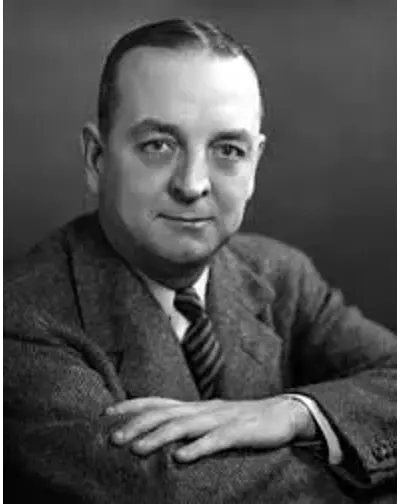
Henry Calvert Simons was an American economist at the University of Chicago. A protégé of Frank Knight, his antitrust and monetarist models influenced the Chicago school of economics. He was a founding author of the Chicago plan for monetary reform that found broad support in the years following the 1930s Depression, which would have abolished the fractional-reserve banking system, which Simons viewed to be inherently unstable. This would have prevented unsecured bank credit from circulating as a "money substitute" in the financial system, and it would be replaced with money created by the government or central bank that would not be subject to bank runs.
