Benjamin Tucker Quotes
Education is a slow process, and may not come too quickly. Anarchists who endeavor to hasten it by joining in the propaganda of State Socialism or revolution make a sad mistake indeed. They help to so force the march of events that the people will not have time to find out, by the study of their experience, that their troubles have been due to the rejection of competition. If this lesson shall not be learned in a season, the past will be repeated in the future
Benjamin Tucker, 1854–1939, Political Philosopher & Individualism Anarchist, Editorial postscript to State Socialism and Anarchism : How Far They Agree, and Wherin They Differ, August 11, 1926
Sourced by: Eigen's Political and Historical Quotations


Executed by the English for his part in the Easter Uprising.


The Turkish revolution was by historical standards relatively bloodless as compared especially with other republican revolutions like the United State and France. However, the revolution that brought Ataturk to power was a relatively mild one in terms of the immediate changes that unlike many revolutions which produced instant radical change. In Turkey, the radical change took place in the years after the revolution when Ataturk with hardly any bloodshed produced compulsory public secular education, scientific elevation in society, separation of mosque and state, gender equality including universal voting, change to western dress, elimination of the caliphate, speech and press freedom, and many others including changing the entire language to use the Latin alphabet instead of Arabic. No nation in history has gone thought more social and cultural change and modernized so fast as Turkey after its revolution. The result is the most modern and successful Islamic country in the world.


This is not only attributed by reliable sources but apparently Roosevelt had said this on several occasions. The word “radical” has had different shades of meaning at different periods of American History. The origin of the word from the Latin means someone who wishes to change things very rapidly and not gradually. In the time of the Civil War, the majority of the Republicans proudly referred to themselves as “radicals” or “radical Republicans” because they wanted to abolish slavery immediately. In the late 19th century the word “radical” referred to anarchists. From the Russian Revolution onward “radicals” were communists who presumably wanted to change governments throughout the work through revolution—very rapid change. However, in the early 20th century, radicals were people who wanted to reform and regulate businesses and monopolies rapidly and it is this sense he was a radical. But by style, he was a radical in most things in that he wanted to change things and change them rapidly.


In a Chicago labor demonstration at the Haymarket a bomb killed several policemen. Fisher and his colleagues were anarchists who had printed a pamphlet the previous day advocating the demonstration and urging violence against the authorities in retaliation for the police-caused death of demonstrators the day previous. When the police were killed, Fisher and his colleagues were arrested, tried, and convicted of murder even though they were not even present at the scene. Several, including Fisher, were hanged before Governor Altgeld commuted the sentences of the other Haymarket “conspirators.” See {43713}

The first Russian Revolutionary Newspaper for Workers. Volodarsky shot to the top of the early revolutionary leadership. Most of the early Russian leaders were intellectuals and theoreticians. Valodarsky had much organizing experience and could communicate well with workers having been active in the Ladies Garment Workers Union and the American Socialist Party. His practical American approach was just what was needed and he became a key member of the leadership. He was so instrumental in the Bolshevik leadership that he was targeted for assassination along with Lenin and Uritsky. Lenin was only wounded. The others died. Goldstein was only 27 years old. Russia named bridges, schools and warships after him.

Socialist International Anthem. Also adopted by the Communists
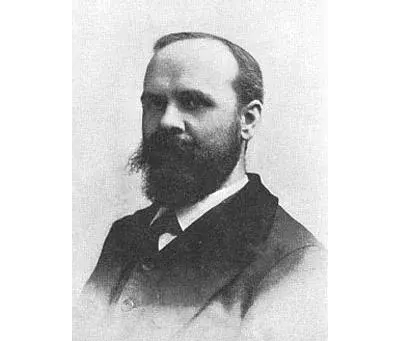
Benjamin Ricketson Tucker was an American anarchist. A 19th-century proponent of individualist anarchism which he called "unterrified Jeffersonianism", Tucker was the editor and publisher of the American individualist anarchist periodical Liberty (1881–1908) as well as a member of the socialist First International.
