Kenneth E. Boulding Quotes
Economic progress means the discovery and application of better ways of doing things to satisfy our wants. The piping of water to a household that previously dragged it from a well, the growing of two blades of grass where one grew before, the development of a power loom that enables one man to weave ten times as much as he could before, the use of steam power and electric power instead of horse or human power - all these things clearly represent economic progress.
Boulding, Kenneth E. Economic Analysis. Harper & Brothers, 1941.


Colman’s view that business failures contributing to society may be more important than the contributions of the wealthy and successful has been a common theme where failed business men make great politicians (Truman) or failed politicians are appreciated as great philosophers (Paine). This seems to be the first American argument that a failed economic enterprise can have a very beneficial short and/or long term effect on economic development. The failed business could start an entire industry which succeeds later when technology or capital becomes more readily available, or even if implemented by a better manager. Arguably, the California gold rush miners never made any significant money, but their presence changed the economic fact of California. The American airline industry has made little or no money in its history but has enabled development throughout the nation. And the dot com bubble may well have been an economic debacle of the end of the 20th century, but it spurred economic development that has benefited the entire globe.


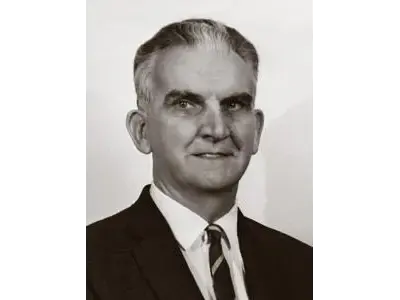
Kenneth Ewart Boulding was an English-born American economist, educator, peace activist, and interdisciplinary philosopher. Boulding was the author of two citation classics: The Image: Knowledge in Life and Society (1956) and Conflict and Defense: A General Theory (1962). He was co-founder of general systems theory and founder of numerous ongoing intellectual projects in economics and social science. He was married to sociologist Elise M. Boulding.
