Ayn Rand Quotes
Economic power is exercised by means of a positive, by offering men a reward, an incentive, a payment, a value; political power is exercised by means of a negative, by the threat of punishment, injury, imprisonment, destruction. The businessman's tool is values; the bureaucrat's tool is fear.
Ayn Rand, 1905-1982, Writer & Philosopher, Capitalism: The Unknown Ideal, 1966
Sourced by: Eigen's Political and Historical Quotations


This view maintains that a nation must be willing to use force and appear to others that it is willing if it is to get any benefit from soft power. Others disagree.

This is an excellent example of the delusion that many Southerners functioned under regarding the importance of cotton to the economy of the nation. There were New York merchants and some New England ship owners who profited from the export of cotton, but cotton contributed very little to the economy of the North and the Midwest while it was essential to the South representing a huge percentage of their output. Industrialization was growing all over the country except in the South where slavery and cotton both held it back. When the South finally decided on war, they did not realize that the North would be able to embargo their cotton exports nor did they realize how little the rest of the country needed the cotton industry It was another great example of political hubris.


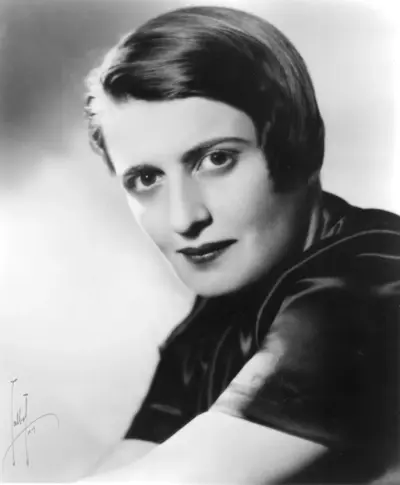
Ayn Rand was a Russian-American writer and philosopher. She is known for her two best-selling novels, The Fountainhead and Atlas Shrugged, and for developing a philosophical system she named Objectivism. Born and educated in Russia, she moved to the United States in 1926. She had a play produced on Broadway in 1935 and 1936. After two early novels that were initially unsuccessful, she achieved fame with her 1943 novel, The Fountainhead. In 1957, Rand published her best-known work, the novel Atlas Shrugged. Afterward, she turned to non-fiction to promote her philosophy, publishing her own periodicals and releasing several collections of essays until her death in 1982.
