Martin Feldstein Quotes
Economic downturns in the United States generally occur when the Federal Reserve raises interest rates to keep inflation in check When the Fed's Open Market Committee believes that it has brought inflation under control, it can start to lower rates and reverse the downturn. But the recession that began in 2007 [The Great Recession] was unusual: since the Fed did not casuse that downturn by tightening monetary policy, it could not reverse it by lowering short term interest rates. The downturn was the result of market mispricing assets, including financial assets such as equities and mortgage-backed securities and real assets such as housing.
"Market mispricing" is an economic euphanism for the bankers and major investors of the nation (and abroad) bidding up the prices of the assets in order to continue to squeeze large profits even after they knew that the assets had been far overpriced. Few wanted to stop playing hoping the music would not stop in the economic game of musical chairs. When it did, there were not enough "seats" and failures casued other failures and the contagion spread.
Martin Feldstein, "The Fed's Unconventional Monetary Policy: Why Danger Lies Ahead", Foreign Affairs, May/June, 2016
Sourced by: Eigen's Political and Historical Quotations


Born thought that her agency was responsible for regulating the new esoteric financial products—derivatives including credit default swaps—for otherwise there would be no regulation at all of financial products that could dwarf the stock and bond market. Summers persuaded her to back off. When the Meltdown of 2008 hit, the huge derivative exposure of the large banks and some insurance companies was so great that it was one of the major causes for the meltdown of the entire banking system. Summers, normally a great economist not only called this one wrong, but later, along with most other government and private economists ignored a very explicit warning—See {637168}, {637986}, and {620038}.

Paul wanted to abolish the Federal Reserve Board. This is a political viewpoint that goes back to the Founding Fathers debates about a national bank. Andrew Jackson terminated the national bank and later the concept of the Federal Reserve Bank took its place.


U. S. Treasury Secretary Larry Summers called Rajan a “Luddite” for this view, but what Rajan observed and predicted was exactly what happened in the Meltdown of 2008 which led to the Great Recession. Rajan was one of the few economists to call this right. Several, invested their own money assuming a crash and made billions. Most, like Summers and the Federal Reserve Chairmen in retrospect admitted that they missed the signs and didn’t connect the dots. See {637168}, {637987}, and {620038}


Sovereign credit substitution is where the government, one way or another, assumes and guarantees the debts of private corporations. This is an elegant way of saying: “taxpayer bailouts”


If the economy is strong voters will often ignore of forgive leadership failures. But not in a poor economy.
The Chairman of the Federal Reserve Board, creatively found alternatives that the Fed had never used before and almost all experts did not even realize that were possible. He and Treasury Secretary Paulson, almost certainly saved the American system of capitalism. But in the process, they in the early stages and Bernanke throughout the crisis took a number of steps to save the system where the very people and companies whose actions had triggered the entire crisis seemed to personally benefit while most Americans were hurt badly and none of them received any immediate personal benefits the way the large bankers did. The amount of money that Bernanke and his Federal Reserve Board associates spend was staggeringly large and that too distressed many Americans. Almost all of the money was actually returned to the taxpayers as a result of the work of the Fed and the Treasury officials, but no one could feel good about the unfair disparity that had so benefitted much of Wall Street particularly and Main Street and the rest of American only generally while so many lost their jobs, their homes, their dignity and their hopes. Only the big banks and bankers also got a personal huge windfall of taxpayer money and took no risk for that. The alternative would have ruined everyone and even have been worse for the average citizen.


He was one of the very few people who warned about the market crash of 1929 and the Great Depression.


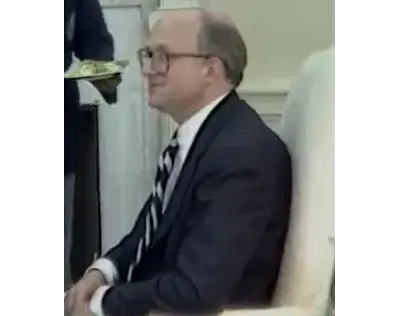
Martin Stuart Feldstein was an American economist. He was the George F. Baker Professor of Economics at Harvard University, and the president emeritus of the National Bureau of Economic Research (NBER). He served as President and Chief Executive Officer of the NBER from 1978 through 2008 (with the exception of 1982 to 1984). From 1982 to 1984, Feldstein served as chairman of the Council of Economic Advisers and as chief economic advisor to President Ronald Reagan (where his deficit hawk views clashed with Reagan administration large military expenditure policies). He was also a member of the Washington-based financial advisory body the Group of Thirty from 2003.
