Ibrahim Babangida Quotes
Each one of us, and, indeed, all those who aspire to national leadership must bring their own visions, views and styles to the business of reforming Nigeria, and the search for solutions.
Babangida, Ibrahim. "Declaration of Interest for the 2011 Presidential Election." 13 Apr. 2010, Abuja. Address.


In China, the religious activities of the Missionaries never really lead to the many troubles between the missionaries and the Chinese. It was their activities in the non-religious arenas articulated here by Denby.


The South at the time had a virtual caste system with a few families in each area controlling and leading. Many Unionists from the argued that the lower and middle class whites had to be given more power and education about their rights. Of course the controlling families had a strong vested interest to see that Reconstruction failed and the “Yankees” were hated. Anti-Negro racism was just a part of the motivation. Maintaining the elite families power of the pre-war political culture was also critical. The Northern Reconstuctionists were therefore twice dangerous.

One of Ferguson’s theses is that historical change often happens very rapidly.

The nation was facing a ruined, unregulated economy with 25% unemployment.

Viscount Morley of Blackburn

In the late 1830's a revolutionary political movement of small tenant farmers grew in upper New York State. There was much violence and anti-renters were hanged and jailed. After a few years they elected 14 members of the state legislature and had their fellows pardoned:

Tragically, the world paid a terrible price for the German upheaval before the better world finally emerged.


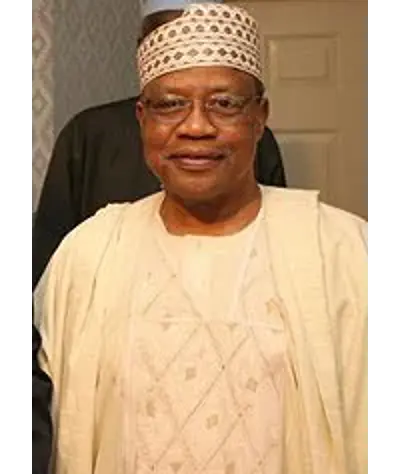
Ibrahim Badamasi Babangida GCFR popularly known as IBB; nicknamed, "Maradona" or "The Evil Genius", is a retired Nigerian Army general who ruled the Federal Republic of Nigeria from 27 August 1985 until his resignation in August 1993. He served as Chairman of the Armed Forces Ruling Council from 1985 to 1993 and Chief of Army Staff from 1984 to 1985; going on to orchestrate his seizure of power in a palace coup d'ètat against Muhammadu Buhari. He rose through the ranks of the Nigerian Army fighting in the Nigerian Civil War and at various times being involved in all the military coups in Nigeria, before advancing to the full-rank of a General and ultimately as Commander-in-Chief of the Armed Forces; and as an unelected President and military strongman from 1985 to 1993, ruling for an uninterrupted period of eight years. His years in power, colloquially known as the Babangida Era, are considered one of the most controversial in the military history of the country, and characterized by a burgeoning political culture of corruption in Nigeria, with Babangida and his regime estimated at least 12 billion dollars (23.9 billion today).
