Qianlong Emperor Quotes
Don’t blame me for not serving you proper warning.
The Emperor had refused to allow trade between China and the Western “Christians” See {641621}. The English diplomats implied to the Emperor that the ships would trade with costal Chinese despite his edicts. He threatened to use force to prevent contact. His Empire, however, was not strong enough militarily to keep the English and other Christians away.
Qianlong, 1711-1799, Fifth emperor of the Chinese Manchu Qing Dynasty, Letter to English King George III
Sourced by: Eigen's Political and Historical Quotations


This is a classic example, not only of the view of many primitive Muslims towards women, but it is an example of blaming the victim, a common characteristic of dictatorial, repressive governments and societies. The fundamentalist Muslims often actually believe that it is man’s nature to sexually attack any woman who may stimulate them; therefore, women should be covered at all times to prevent this stimulation of males. This view of men is also very primitive assuming that men have no self control and have no moral responsibility for their actions.

He was the only public official to so apologize.


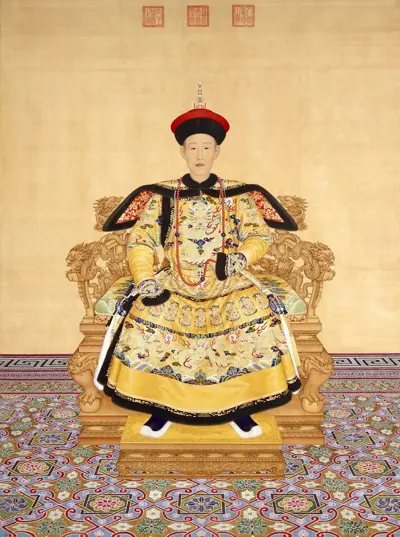
- Born: September 25, 1711
- Died: February 7, 1799
- Nationality: Chinese
- Profession: Emperor
The Qianlong Emperor was the fifth Emperor of the Qing dynasty, and the fourth Qing emperor to rule over China proper, reigned from 1735 to 1796. Born Hongli, the fourth son of the Yongzheng Emperor, he reigned officially from 11 October 1735 to 8 February 1796. In 1796, he abdicated in favour of his son, the Jiaqing Emperor—a filial act in order not to reign longer than his grandfather, the Kangxi Emperor, who ruled for 61 years. Despite his retirement, however, he retained ultimate power as the Retired Emperor until his death in 1799. He thus was one of the longest-reigning rulers in the history of the world, and dying at the age of 87, one of the longest-lived. As a capable and cultured ruler inheriting a thriving empire, during his long reign the Qing Empire reached its most splendid and prosperous era, boasting a large population and economy. As a military leader, he led military campaigns expanding the dynastic territory to the largest extent by conquering and sometimes destroying Central Asian kingdoms.
