Feisal G. Mohamed Quotes
Domestic and international law do not look kindly upon the assassination of a ruler, and it is not likely to be an option openly entertained by any diplomatic institutions. But that is at least partly because law and policy are created by political leaders, who rarely warm to ideas that might place them in the line of fire.
Feisal G. Mohamed, Political Scientist, “The Tyrant As Target”, New York Times, May 12, 2013
Sourced by: Eigen's Political and Historical Quotations


This advice has been taken by many elected Presidents and Prime Ministers in a democracy beginning a new administration. Essentially it is delay and “kick the can down the road”.

This is one of the best statements on one of the major reason that terrible leaders stay in power in much of the world but especially Africa. In Uganda, they got rid of the maniacal dictator, Idi Amin, by allowing him to keep some of the money he stole and giving him asylum from world prosecution in Saudi Arabia. It was an unjust and unfair solution as he was never accountable for his crimes against humanity, and he lived well on the money he stole, but thousands of lives were saved and Uganda then was able to grow and develop. It is a Hobsen’s choice for Africa and the World. Both solutions are terrible, and few have ever been able to choose the pragmatic route that was taken in Uganda.


He was very critical of Arraham Lincoln even though he was a Republican. Many percieved that Lincoln's administration could not get anything done. Lincoln might have lost the 1864 campaign but for the great victory that General Sherman's troops had in taking Atlanta. This changed a lot of mionds about Lincoln's War strategy. Actually, in the first 2 years of the Civil War, Lincoln could not get his generals to fight his preferred kind of war until he appointed Grant who brought Sherman to high command.


George W. Bush had become very unpopular and many politicians were trying to distance themselves from him, his policies, and the poor implementation of those policies. Senator Joseph Lieberman, a Democrat, had just lost his own primary election and was attacked because he advocated support of the American president in war and foreign policy.
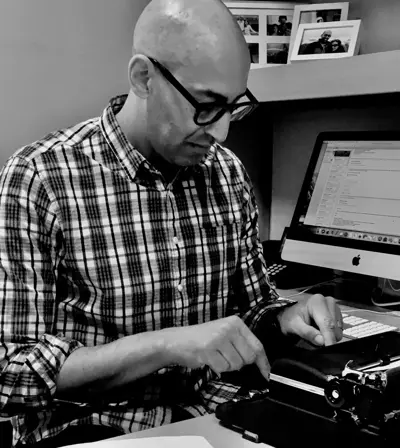
Feisal G. Mohamed is a scholar, critic, and essayist whose writing has appeared in The New York Times series "The Stone," in Dissent Magazine, the Chronicle Review, the Yale Review, The American Scholar, Huffington Post, and on the website of The New Republic. He is currently a Professor of English at Yale University. Among his awards and recognitions are a New Directions Fellowship from the Mellon Foundation, an Honorable Mention for the Modern Language Association's William Riley Parker Prize, and a James Holly Hanford Award for an outstanding book on poet John Milton. He holds a BSc in Biology (1997) and MA in English (1999) from the University of Ottawa, a PhD in English (2003) from the University of Toronto, and an LLM (2012) from the University of Illinois College of Law.
