Gray Davis Quotes
Deregulation [of electricity] does not work unless you have more power than you need.
California deregulated it’s electrical utilities who sold their generating capacity to others. As power consumption grew, there was not enough generating capacity in California and the state had to buy on the open market where they were gouged. The cost of electricity soared by 450 percent in the first year alone.
Gray Davis, Governor of California (Democrat), Interview, ABC This Week, May 13, 2001
Sourced by: Eigen's Political and Historical Quotations


To the modern reader utterances such as this from a Conservative Prime Minister seem astounding. However, the Great Depression existed in Canada as well as the United States, and Franklin Delano Roosevelt was not the only world leader who would reach the conclusion that business and capitalism must be profoundly regulated and the system changed if it was to be saved.


At the time, millions of Americans had no access to electrical power, especially in the rural areas. FDR and the New Deal changed that for millions of Americans with the Rural Electrification initiatives. Private electric utility corporations wanted the monopoly but did not want to sever everyone. The cost to electrify a densely populated area is much less on a per capita bases than for a rural area where it might take 25 miles of wire to serve 5 families as opposed to a city where the same 25 miles of wire might serve 5000 or even more families. The only solution of for the densely populated area to pay a little more and subsidize the rural areas home and farm electricity and require the utility corporations to serve everyone. That is essentially what happens today, and the subsidy not only comes from higher rates but also the general tax revenue of the Federal Government and many states. Before the New Deal, under Hoover there was no federal attempt to solve this problem. FDR’s administration, however come up with a number of ways, many of which are still in use today.

in the Meltdown of 2008 Gramm was one of the most ideological deregulators in Congress. As the Meltdown of 2008 hit, he immediately made this statement when few people even knew the extent of what had happened, much less why it happened. Gramm’s instant absolution of deregulation as one of the causes is a classic case of denial. There were few economic issues of controversy that did not contribute to the totality of causes. And a few years later Gramm was one of the very few ideologues who still believed that deregulation did not have a role in the Meltdown and the Great Recession that followed. For a contrast from the expert in his own party, see {638023}.


Theodore Roosevelt had made many changes to control corporate rapaciousness and disregard for the law. Taft, his handpicked successor, wanted to roll back some of the regulations feeling that the problem of corporate corruption and venality had been solved. TR did not agree and the men’s close friendship dissolved over this issue—so much so that Roosevelt ran against Taft in the 1912 election.

Brandeis was U. S. Supreme Court Justice Louis D. Brandeis, 1856-1941, who wrote that competition would control prices if only healthy competition could be maintained—the problem was resolved by both increasing competition and much more stringent regulation of corporations.


Criticizing federal regulators in the 1989 Savings and Loan scandal:


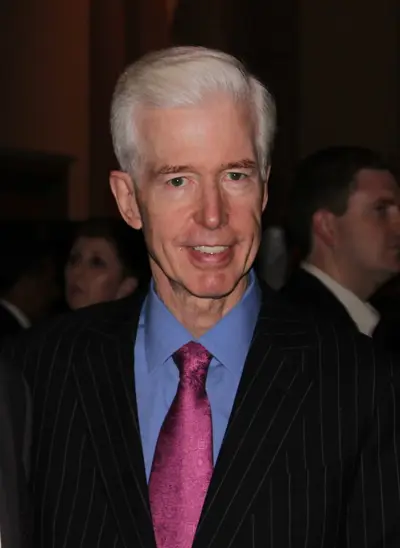
Joseph Graham "Gray" Davis Jr. is an American former attorney and politician who served as the 37th governor of California from 1999 to 2003. In 2003, only a few months into his second term, Davis was recalled and removed from office, the second state governor successfully recalled in U.S. history. Prior to serving as governor, Davis was chief of staff to Governor Jerry Brown (1975–81), a California State Assemblyman (1983–87), California State Controller (1987–95) and the 44th lieutenant governor of California (1995–99). Davis holds a B.A. in history from Stanford University and a J.D. from Columbia Law School. He was awarded a Bronze Star for his service as a captain in the Vietnam War.
