John Stuart Mill Quotes
Complete liberty of contradicting and disproving our opinion, is the very condition which justifies us in assuming its truth for purposes of action.
Mill, John Stuart. On Liberty. John W. Parker and Son, 1859, ch. 2.


She was dealing with a serious campus situation where an invited speaker, Chief of Police Kelly of New York City was prevented from giving his p resentation on the controversial “Stop and Frisk” rules by student protesters who opposed the practice. Brown’s tradition of hearing anyone on the campus regardless of point of view had been broken to the distress of most students, faculty and alumni.


He was announcing that a lecturer Kevin Barrett would not be fired from the University. Barrett had taken the position with his students that the 9-11 attack on the World Trade Center could not have been done by a handful of terrorists and it must have done by or with the complicity and help of forces inside the United States government. There had been outrage throughout the country with demands by many politicians for his ouster. The University did not bend to the political pressure even in the case where there was such an outrageous and incorrect view.

Later published under the pseudonym Silence Dogood in the New England Courant, July 9, 1722. Cato originated the quotation in Ancient Rome. A millennium later, Ben Franklin picked it up and made it and made it very popular. Note that it was very common in early America for publishers and writers to copy materials from others and publish them under their own name. America was a major intellectual property pirate in its early years copying and printing much and rarely giving credit and never paying an author's royalty--not unlike some of the Asian nations today.


Ingersoll was considered to be the greatest orator and political thinker of his day, but his overt atheistic views curtailed his elected political career.


The Scientific Project that developed the Atomic Bomb. Oppenheimer was the great physicist who directed the successful development of the atomic bomb so as to build the weapon before Hitler did in World War II. However, as the technology evolved, he had doubts as to the wisdom of creating even more powerful hydrogen weapons. His viewpoint was hurting the administration’s policy of rapid unlimited nuclear weapons development, and he was the victim of a character assassination whereby his security clearance was withdrawn. The “father” of the atomic bomb was the first American casualty of atomic weapons development.


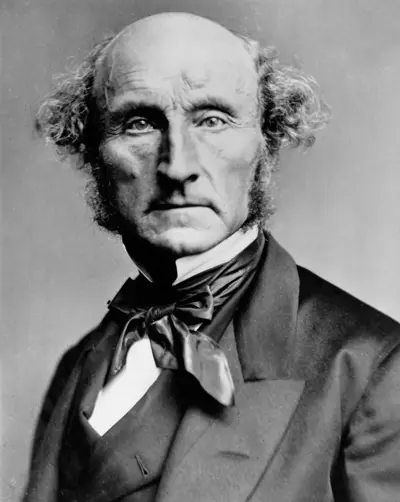
John Stuart Mill, usually cited as J. S. Mill, was an English philosopher, political economist, Member of Parliament, and civil servant. One of the most influential thinkers in the history of classical liberalism, he contributed widely to social theory, political theory, and political economy. Dubbed "the most influential English-speaking philosopher of the nineteenth century", he conceived of liberty as justifying the freedom of the individual in opposition to unlimited state and social control.
