Walter Benjamin Quotes
Capitalism is a purely cultic religion, perhaps the most extreme that ever existed.
Benjamin, Walter. Selected Writings, Volume 1: 1913-1926. Edited by Marcus Bullock and Michael W. Jennings, Harvard University Press, 1996, p. 288.


In the late 19th century, the Sherman Antitrust Act was passed to control vicious monopolies and trusts. There were many who thought that this would be philosophically incompatible with the doctrine of free enterprise. James observed that the American philosophy required the testing of each doctrine and in the case of monopolies, the results were destructive for consumers, competitors, and society in general, with the monopolist the only beneficiary of the free enterprise where consumers and competitors lose their freedom.


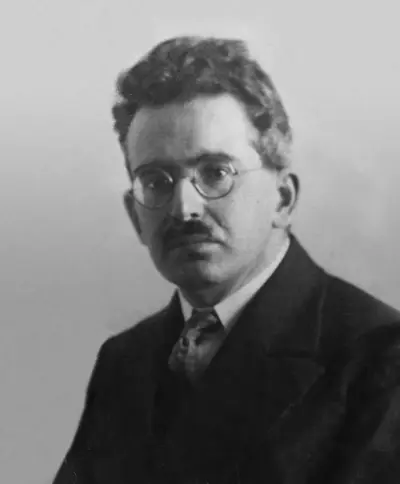
Walter Bendix Schönflies Benjamin was a German Jewish philosopher, cultural critic and essayist. An eclectic thinker, combining elements of German idealism, Romanticism, Western Marxism, and Jewish mysticism, Benjamin made enduring and influential contributions to aesthetic theory, literary criticism, and historical materialism. He was associated with the Frankfurt School, and also maintained formative friendships with thinkers such as playwright Bertolt Brecht and Kabbalah scholar Gershom Scholem. He was also related to German political theorist and philosopher Hannah Arendt through her first marriage to Benjamin's cousin Günther Anders.
