Joseph Schumpeter Quotes
Capitalism inevitably and by virtue of the very logic of its civilization creates, educates and subsidizes a vested interest in social unrest.
Joseph A. Schumpeter, 1883-1950, Austrian Economist, Capitalism, Socialism and Democracy
Sourced by: Eigen's Political and Historical Quotations

By producing growth and an increasing standard of living and universal education, capitalism’s citizens have the time, education, and resources to protest and produce social unrest. However, that assumes that there is also a democratic state. For Schumpeter and many others, capitalism and democracy go hand in hand, but many point to historical examples of one developing faster than the other.

In a capitalistic system, if a company is very successful, it drives its competitors out of business and this leads to monopoly in that field which kills capitalism which depends on competition.


In May of 1886 police had killed some strikers for an 8 hour work day at the McCormick Plant in Chicago. A left wing newspaper called a rally using the word “revenge.” (See {43614}.) The next day, at the rally, someone threw a dynamite bomb killing several police who in turn wounded and killed many of the protestors. 31 people were indicted for the “Haymarket Bombing,” 8 were tried, and 7 were convicted and sentenced to death including Spies. There was however, no evidence linking any of the defendants with the bombing, only evidence linking them with left wing, anarchist positions and writings.


Abrams originated this famous phrase which many have been used subsequently for various “socialized” government benefits that were available to the rich but not the poor. He was referring to the fact that at the time, the government provided housing assistance to the rich by having federally insured mortgages and granting tax deductions for the interest in home mortgages, but there was no assistance to the poor who could only afford to rent and had no tax deductions nor was there any federal public housing assistance. During the Great Recession the phrase was often used when the government gave bail out money to General Motors and the largest banks who were close to bankruptcy, but the landscaping gardener or the hot dog vendor whose business was falling because of the recession were told that is the capitalist system—there are some winners and some losers. The government officials who advocated the bailout did not disagree about the fairness and appropriateness of the Abrams phrase but if they had not bailed the banks out, the entire economic system of the country would probably have collapsed and the ensuing depression would hurt the average worker and the poor even more. Related to the recent “too big to fail” concept.


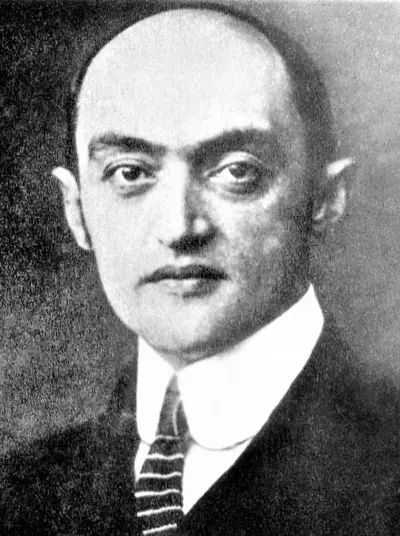
Joseph Aloïs Schumpeter was an Austrian political economist. Born in Moravia, he briefly served as Finance Minister of Austria in 1919. In 1932, he became a professor at Harvard University where he remained until the end of his career, eventually obtaining U.S. citizenship. One of the most influential economists of the 20th century, Schumpeter popularized the term "creative destruction" in economics.
