Robert Kennedy Quotes
Can I suggest that the sheriff and the district attorney, in the lunch break, go out and read the Constitution.
The two law enforcement officers had testified that they arrested demonstrators who had “come to break the law” and had not at that point broken any laws.
Robert F. Kennedy, 1925-1968, U.S. Senator (Democrat, NY), U.S. Attorney General, Statement at Senate Hearings
Sourced by: Eigen's Political and Historical Quotations


Responding to suggestions that drug traffickers be summarily executed:


Explaining why his Justice Department was arguing in court that abortion protestors who interfere with abortion clinics could be criminally prosecuted. As a rabid abortion opponent, anti-choice people expected him to side with the violent protesters.


This quotation shows that “due process” was an important principle for the colonists long before the American Revolution and the Constitution and Bill of Rights. Rights. Connecticut and New York passed similar laws after Massachusetts.


And let the sheriffs who have arrested them bring them before the justice without any other summons.
This assize is generally considered to be the first written specification of due process in English Common Law.


This is one of the many statements of President Bush that contributed to his reputation as a polarizing politician. His supporters turned to this statement to illustrate that Bush was a supporter of the Constitution and civil liberties by urging the nation not to engage in vigilantism or give vent to their stereotypic views of minorities. Detractors took the same statement as a perfect example of Bush’s assault on Constitutional freedoms. Law enforcement does not determine guilt or innocence in our system. Police and prosecutors in America do not determine guilt or innocence; juries do. They argue that the Bush administration law enforcement policies are designed to have law enforcement usurp more and more of this facet of criminal justice.
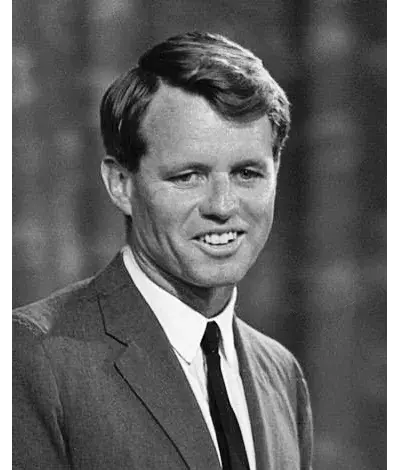
Robert Francis Kennedy, also referred to by his initials RFK or by the nickname Bobby, was an American politician and lawyer who served as the 64th United States Attorney General from January 1961 to September 1964, and as a U.S. Senator from New York from January 1965 until his assassination in June 1968. He was, like his brothers John and Edward, a prominent member of the Democratic Party and has come to be viewed by some historians as an icon of modern American liberalism.
