Periyar E. V. Ramasamy Quotes
By helping the poor, we must be able to remove their poverty. By extending help to one here and one there in the form of providing food will not remove poverty
Periyar E. V. Ramasamy, 1879–1973, Indian Dravidian social activist & politician, Founder of Dravidar Kazhagam., Veeramani, Collected Works of Periyar E.V.R., 2005
Sourced by: Eigen's Political and Historical Quotations


The Pool Laws provided economic and food relief for the very poor—an early type of welfare. Malthus and other conservatives hated the Poor Laws, but many like Malthus felt it immoral to terminate what was then the only social safety net. And none of the critics could suggest anything better and especially anything that would eliminate poverty altogether. The same issues were to be fought out in America during the Hoover Administration when the Great Depression struck. Hoover’s refusal for government to be the social safety net together with his inability to improve the economy, led to his ousting and the establishment of the New Deal with FDR.

There are those who claim that the principle was created by other staff of Shriver’s Office of Economic Opportunity. However, there is little consensus about this. There is no doubt that Shriver, as the Director of the Program, signed the papers and made the speeches implementing it. Ironically, this was the most unpopular aspect of the Poverty Program with all other elements of society. The principle of this motto was first espoused in the middle of the 17th century by Gerrard Winstanley, the leader of the English Digger Movement. See for example {616965}.


Welfare reform was desired by liberals as well as conservatives. They just had different ideas of how best to reform the system.


When budget cutting was deemed necessary, the Governor was a strong voice for not cutting services to the most needy.
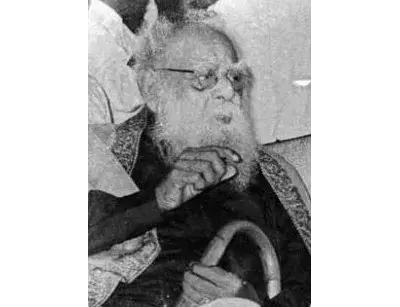
Erode Venkatappa Ramasamy, commonly known as Periyar or Thanthai Periyar, was an Indian social activist and politician who started the Self-Respect Movement and Dravidar Kazhagam. He is known as the 'Father of the Dravidian movement'. He rebelled against Brahminical dominance and gender and caste inequality in Tamil Nadu.
