Liam Neeson Quotes
But let's just say, I'm Irish. I grew up in the 1950s. Religion had a very tight iron fist.
Neeson, Liam. Interview. The Irish Times, Irish Times Trust, 2005.


The religious people in Saudi Arabia are very powerful and don't allow anyone to step on their toes.
Criticize them in the press.


In modern times this would appear to be a most reasonable approach to quality and doctrinal control within a church. But keep in mind that these were to be promulgated by Catholic Kings and become the civil law of the land as well as the religious. So the Catholic Bishops were granted control of who could preach in any church in the Bishopric. The power of the state was there to back up the Bishops with criminal laws and law enforcement. This together with the Inquisition would counter the forces of Reformation—Protestants.
The clerics of the day were exasperated trying to control the new technology of printing. Almost anyone could produce books and many did. Some of these dealt with religion and some were anonymous. The Council required that members of religious orders have their books reviewed prior to publication by their religious superiors, but the thing that frustrated them most was the anonymous tract. They could not attack the character of the personage of the author and in there was slander or heresy, they had no one to attack or punish.

In 1877 Wasburn was dropped from the List of Ministers by the Unitarian Church. He had become very critical of organized and orthodox religion of all kinds.


1st Viscount Bolingbroke. This is the argument that was and still is given by most theocracies and nations opposed to pluralism. It was also a quotation which with the American founders were familiar and were targeting this view when they demanded the 1st Amendment.

Smith was the first Roman Catholic to run for President. He was very popular but there was a substantial amount of anti-Catholicism in America at the time. He lost, probably by the margin of the anti-Catholic vote.
Ceremonialists refer to Roman Catholics.

This notice of Excommunication was promulgated to the Catholic clergy in Ireland in May of 1538. It required all Roman Catholic leaders to size the property of Protestants or Catholics who sympathized with them. Those who did were then regarded as traitors by the Protestant King. The anti-Protestant feeling culminated with the massacre of about 100 Protestants who were drowned in Bann a few years later.


Spinoza’s ideas were considered so radical and dangerous that he was the only man in history who was excommunicated by the Catholics, the Jews and the Muslims. This was his observation after his first excommunications -- by his Jewish Congregation in Amsterdam.
Stephani had written a legal analysis of the 1555 “Peace of Augsburg” and used the phrase of the quotation to describe the most basic and important legal agreement. It was that the recognized religion of a nation would be determined by the religion of the king or other ruler. Prior, Protestant and Catholic nations were constantly warring with each other and supporting insurrections in another country of its co-religionists and often warring with the other country where some towns were mostly Protestant and others, mostly Catholic. The treaty which dealt with Europe initially allowed Catholic citizens of a nation ruled by a Protestant to emigrate to a Catholic nation and the reverse. Those who chose to remain, would therefore be a minority of the country where their king was of a different faith. This principle is one of the reasons that English law requires the King or Queen to be the Head of the Church of England. In effect the Protestants controlling England at the time guaranteed that the sovereign was a Protestant and could not have a Catholic spouse in line for the throne. This then guaranteed that England would remain Protestant since the ruler was Protestant. Other European nations, Protestant and Catholic, had similar schemes and many still have them to this day.
_0_thumbnail_47x47.jpg "Statue of Robert Hall in Leicester.")
Many of the founding fathers were aware of such views in England as the same issues were being debated in America in the debates on Ratification of the Constitution and the required inclusion of the Bill or Rights—specifically the First Amendment.

The Roman Catholic Church in America had a very difficult problem with slavery. Catholics were themselves a minoirty, hated and distrusted by many Protestants. In most of the country, the distrusr was based on their large immigrant population, but in the South Catholic theology was hated and the Vatican and Pope were particular targets. The Catholic Clergy generally did not want to take sides in the most contentious issue in America since its inception. The Southern Catholic Clergy did not have that option as in the South, anyone who was not a supporter of slavery was an "enemy of the community and subject to all kinds of violence." Some Southern priests were willing to take the personal risk but did not want to put their followers at risk. In a strange consequence, Catholics--especially Irish Catholics--fought on both sides of the Civil War and often against each other. While it was not an exemplary moral behavior for the Church, there were difficult pressures on Catholic leaders. Further, most of the lowest and most difficult, undesirable jobs were filled by Catholics and most Catholic laymen so and end to slavery as the start of pitting the Catholics against the Blacks. So there was not a groundswell for abolition in most Catholic parishes even in the North.

In addition to being a Roman Catholic priest, Father Coughlin was an outspoken radio commentator who was well known for his controversial political opinions, see {598783}, {598784}.
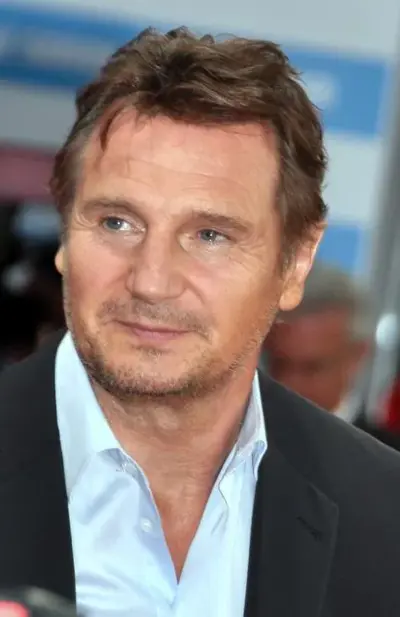
William John Neeson OBE is a Northern Irish actor who holds Irish, British, and American citizenship. He is one of the highest-grossing actors of all time and has been nominated for several awards, including an Academy Award for Best Actor, a BAFTA Award for Best Actor in a Leading Role, and three Golden Globe Awards for Best Actor in a Motion Picture Drama.
