Tobias Wolff Quotes
But as my brother was doing his research for a book about my father, it became his opinion that the most influential anti-semitism my father encountered when he was growing up was from Jews, because his relatives were German Jews, and doctors.
Birnbaum, Robert. "Tobias Wolff." Identity Theory, 2 Sept. 2003.


Ford was a notorious anti-Semite.

In his early years, Stalin was a strong opponent of Anti-Semitism ({627514}) but he felt he needed to make a pact with Nazi Germany—the Hitler-Stalin Pact. In meeting with Nazi Foreign Minister Ribbontrop, Stalin as a quid pro quo promised to get rid of “Jewish Domination” (which never existed but there were many Jews in positions) among officials and intellectuals. He then fired his Jewish Foreign Minister Litvonof and replaced him with Vyacheslav Molotov to whom he have this instruction. This was the first major official Anti-Semitism of the Soviet Union but it continued thereafter. See {636526} & {636527}.


According to Bauer and his anti-Semitic followers, the problem with the Jews was Judaism


This quotation was uncovered in 2010 when more of the Nixon White House tapes were released. Nixon tended to have the worst stereotyped view of all minority groups. At one level, Nixon was just being political by not inviting any Jews except supporters. However, he did not maintain that same criterion regarding Protestants, Catholics, or other religious groups. The reality was that Nixon was generally very anti Semetic but saw some Jews as “good Jews” like his Secretary of State Henry Kissinger and Golda Meir, the Israeli Prime Minister in whose honor the dinner was being held. See {621141} as an example.

1st Earl of Beaconsfield. O’Connell was an Irishman.


Vladimir Lenin. Despite Lenin’s abhorrence of anti-Semitism, there were any other Russians for whom it was normal. After Lenin’s death, Stalin and his henchmen used anti-Semitism to divert attention from the Communist Party’s failure to meet its economic and other goals.

After the Holocaust and the rest of the Nazi era horrors, German leaders have led the way in trying to eliminate any anti-Semitism that emerges in Germany, and the German culture and attitudes have changed dramatically for the better.


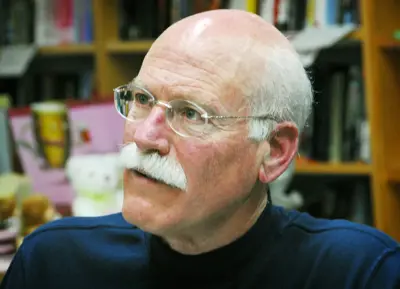
Tobias Jonathan Ansell Wolff is an American short story writer, memoirist, novelist, and teacher of creative writing. He is known for his memoirs, particularly This Boy's Life (1989) and In Pharaoh's Army (1994). He has written four short story collections and two novels including The Barracks Thief (1984), which won the PEN/Faulkner Award for Fiction. Wolff received a National Medal of Arts from President Barack Obama in September 2015.
